Top Signs You Need Garage Door Service – Don’t Ignore These
A garage door that takes two seconds longer to open than it did six months ago isn’t “just getting older” – it’s a measurable increase in resistance, and that resistance usually traces back to a fraying cable or a seized roller. Most garage door failures aren’t sudden. They announce themselves for weeks or months through sounds, sluggishness, and small visual clues that homeowners learn to live with. The trouble is that the early warning signs are cheap to fix and the late ones aren’t. If you’d rather not climb a ladder and guess, call us at (877) 460-4338 and we’ll look at it with you.
Below are the symptoms we check first when a garage door in Arlington Heights starts misbehaving – what to listen for, what to look at from the floor, and which ones mean stop using the door today.
What sounds should make you pick up the phone?
Specific sounds map to specific failures, which is why the noise your door makes matters more than how loud it is. A grinding noise usually points to worn rollers or a dry, failing bearing. A high-pitched squeal tends to come from metal-on-metal contact along the track or hinge points. A sharp popping sound, especially one followed by the door refusing to lift, is the sound of a torsion spring letting go. Each one tells a technician where to look before the truck even pulls up, and each one is a different repair.
Here’s how we sort the common ones:
- Grinding: worn steel rollers, a failing bearing plate, or debris in the track. Often fixable before it damages the panels.
- Squealing: rollers, hinges, or the opener’s drive gear running dry. Lubrication helps early; worn parts need replacing.
- Popping or a loud bang: a torsion spring breaking. Stop using the door and call – this is a same-day repair, not a wait-and-see.
- Rattling that gets worse: loose hardware or a track pulling away from the frame. Left alone, it throws the door off balance.
- Clicking from the opener with no movement: a stripped gear or a failing logic board, which is squarely opener territory.
In our experience, the squeals and rattles are the ones people sit on longest, and they’re also the cheapest to catch early. A quiet door is a healthy door. If yours has developed a personality, that’s your cue.
How does a 30-second balance test reveal spring wear?
A door that won’t hold itself halfway open is telling you the springs are tired. This is the single most useful check a homeowner can do without tools, and it catches spring wear weeks before a full break. Here’s how it works:
- Close the door and pull the opener’s release cord so the door is in manual mode.
- Lift the door by hand to about waist height, then let go.
- A balanced door stays roughly where you put it. A door that sinks to the floor has weak springs. A door that flies up has springs that are too strong or a cable problem.
Do this test with the door disconnected from the opener and keep your hands clear of the hinges and the spring shaft. If the door feels heavy or drops, don’t force it – the springs are under high tension and that’s exactly when a tired spring snaps. A balanced door is also a quieter door and easier on the opener motor, so spring health sits at the center of most of what we fix. Our garage door spring repair work is the repair we handle most, and the balance test is the reason why so many calls start there.
Why does my door reverse before it touches the ground?
A door that reverses before hitting the floor is not always a sensor problem. When the safety sensors are aligned and clean and the door still reverses, technicians check three other causes first: a misadjusted travel limit on the opener, a track or roller binding that the opener reads as an obstruction, and a warped or compressed bottom seal that trips the contact safety system. Any of these can mimic a sensor fault, and swapping sensors won’t fix them.
What to check from the floor before you assume the worst:
- Are the two sensor lenses facing each other and free of dust, cobwebs, or a knocked-out of alignment bracket?
- Does the door reverse in the same spot every time? A consistent spot points to a limit setting or a bind, not a sensor.
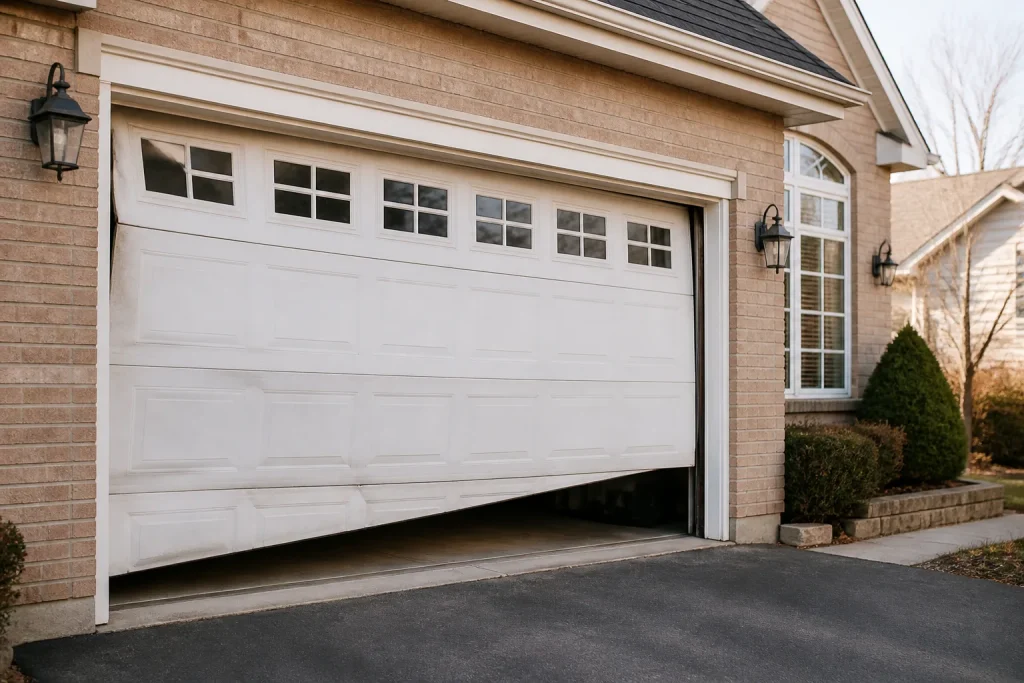
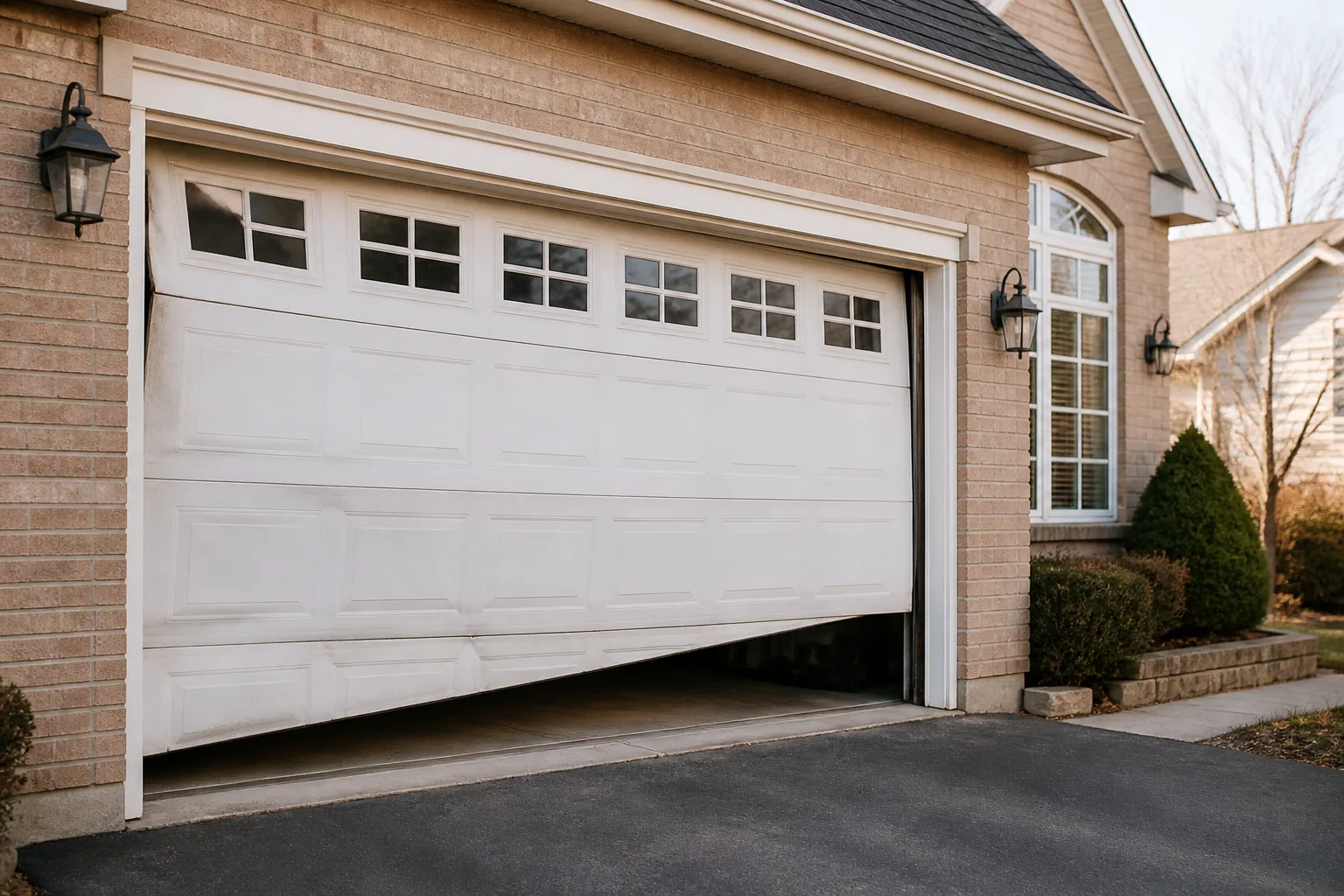
- Is there a visible gap or sag at the bottom panel?
- Does the opener’s light blink a code when it reverses? That’s a diagnostic, not a decoration.
If the sensors are clean and aligned and the door still won’t close, the fault is usually in the opener’s logic or travel settings – and that’s when it’s worth having someone look at it rather than guessing. In Arlington Heights we see a lot of this on doors that have settled with the seasons, where a track has shifted just enough to trip the safety system.
What can you check visually from the floor?
You can catch most of the serious problems on a garage door without touching a ladder. The four visual points we check first are cable fraying, roller wear, bottom seal compression, and weatherstrip gaps – and each one points to a different stage of wear. Cables are the ones to take seriously: a frayed cable is a broken cable waiting to happen, and it can whip when it lets go.
- Cables: look at the cables running down each side. Fraying, kinks, or a cable sitting off its drum is a stop-and-call situation. Don’t touch a cable under tension – this is one of the genuinely dangerous parts of a garage door.
- Rollers: worn rollers look flat-spotted, cracked, or visibly loose in their brackets. They’re the usual cause of grinding and a cheap fix before they chew up the track.
- Bottom seal: a compressed or torn seal lets water, cold air, and pests under the door. It’s also often the cause of a door that reverses near the floor.
- Weatherstrip gaps: daylight around the frame means energy loss and, in winter, a draft that no amount of shoving will fix.
If you’re looking at a Clopay or Amarr door, the panel construction and seal profile are specific to the model, so a worn seal is replaced to fit, not improvised. For a door that’s off its track, badly out of balance, or showing a frayed cable, our garage door repair page covers how the fix usually runs and what to expect on price.
The symptom homeowners ignore that leads to motor burnout
A door that runs but moves slowly under load is the single most common early warning we see ignored. It’s not a “give it time” situation. A door that’s sluggish – especially one that strains, slows, or sounds like it’s working harder than it used to – is asking the opener motor to make up for a mechanical problem it wasn’t built to fight. That extra load is what burns motors out.
The usual culprits are weak springs, a binding track, a seized roller, or a door that’s out of balance. The opener keeps pushing, the motor overheats, and eventually it quits. The irony is that the slow door was the cheaper fix – the burnt-out motor is the expensive one, and it often comes with a damaged gear or control board that a new unit won’t fix on its own.
We repair openers across the full age range, from older Craftsman units to current LiftMaster, Chamberlain, and Genie systems, and we’ve learned that the motor is usually the messenger, not the cause. If your door moves like it’s wading through water, that’s the door’s balance and hardware talking, not the opener. Getting the mechanical side sorted first is what keeps the motor alive.
When should you call a pro instead of watching it?
Call a pro when the symptom involves anything under tension, anything electrical, or anything that changes suddenly. The rule we give homeowners is simple: if it involves the springs, cables, or the opener’s wiring, don’t touch it – those parts store and deliver enough force to cause serious injury, and a trained technician with the right tools is the only safe way to deal with them.
Call today if you notice:
- A frayed or off-drum cable
- A popping sound or a door that won’t lift at all
- A door that reverses, or won’t close
- An opener that clicks or hums but doesn’t move the door
- A door that’s dragging, straining, or visibly off its track
A stuck door isn’t a tomorrow problem when it’s your home’s main entry and security. Same door, same day is the point. We offer emergency service for doors that fail, and our technicians have up to 9 years of experience, so the person at your door already knows your system before they arrive. Spring, opener, panel, or full replacement – we handle it.
Related services in Arlington Heights: If the problem turns out to be the motor rather than the door, garage door opener repair is where we start. And for a broader look at how we treat the whole system, Arlington Heights Garage Door Repair Pros lays out the full picture.
The Bottom Line
Most garage door failures leave a trail. A sound, a slow lift, a door that won’t hold halfway up – each one is a warning you can act on cheaply before it becomes an emergency. The balance test, a floor-level look at your cables and rollers, and a habit of listening to your door will catch most problems early. And when the symptom involves springs, cables, or wiring, that’s a job for a specialist, not a weekend project. We’re a garage door specialist, not a generalist, and that focus is why we can tell you what’s wrong from the sound alone.
If you’re in Arlington Heights and need help, Arlington Heights Garage Door Repair Pros offers free estimates – call (877) 460-4338. We’ll tell you what’s going on and what it takes to fix it, and the price is quoted and agreed before any work starts.
Frequently Asked Questions
Garage door repair in Arlington Heights varies by the part involved, and a written estimate from the technician is what sets the final figure. Common repairs run from a few hundred dollars for hardware to more when springs, cables, or the opener are involved. Call (877) 460-4338 for an exact quote – estimates are free.
Yes – stuck doors are what emergency service is for, and we can often get to the same door the same day. If you’re in Arlington Heights with a door that won’t open, won’t close, or is off its track, call (877) 460-4338 and we’ll get it looked at.
No – the price you agree to before work starts is the price, and anything we find on arrival is quoted to you first. Call (877) 460-4338 for a free estimate and an honest look at what the door needs.
The local technicians we connect you with are licensed and insured as their state requires, and they work on the brands we know best – LiftMaster, Chamberlain, Genie, Clopay, Amarr, Wayne Dalton, Craftsman, and Raynor. Call (877) 460-4338 to book a free estimate.
Written by the team at Arlington Heights Garage Door Repair Pros.
Need Garage Door Help?
Call Arlington Heights Garage Door Repair Pros - the local pro we connect you with is licensed and insured, here with fast after-hours help in Arlington Heights.
(877) 460-4338