Last updated November 22, 2026
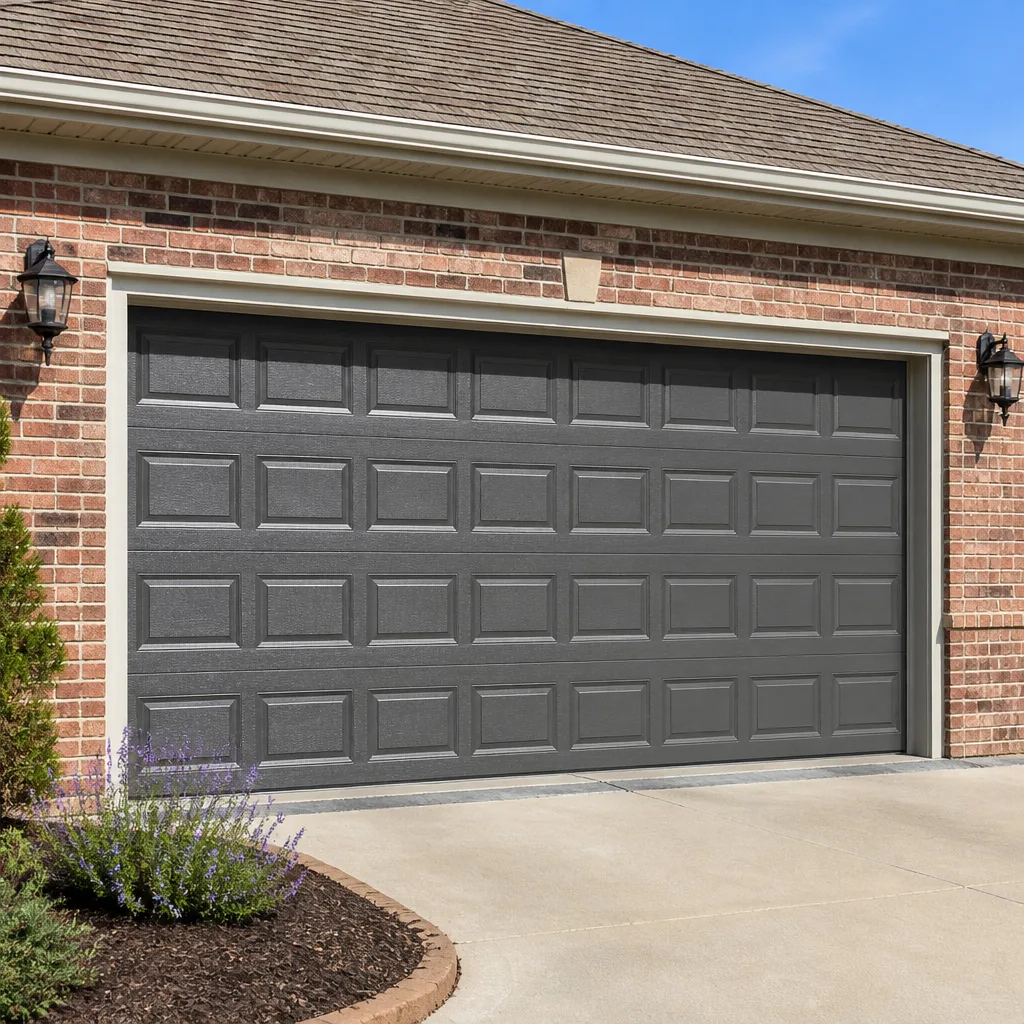 Raised-panel steel
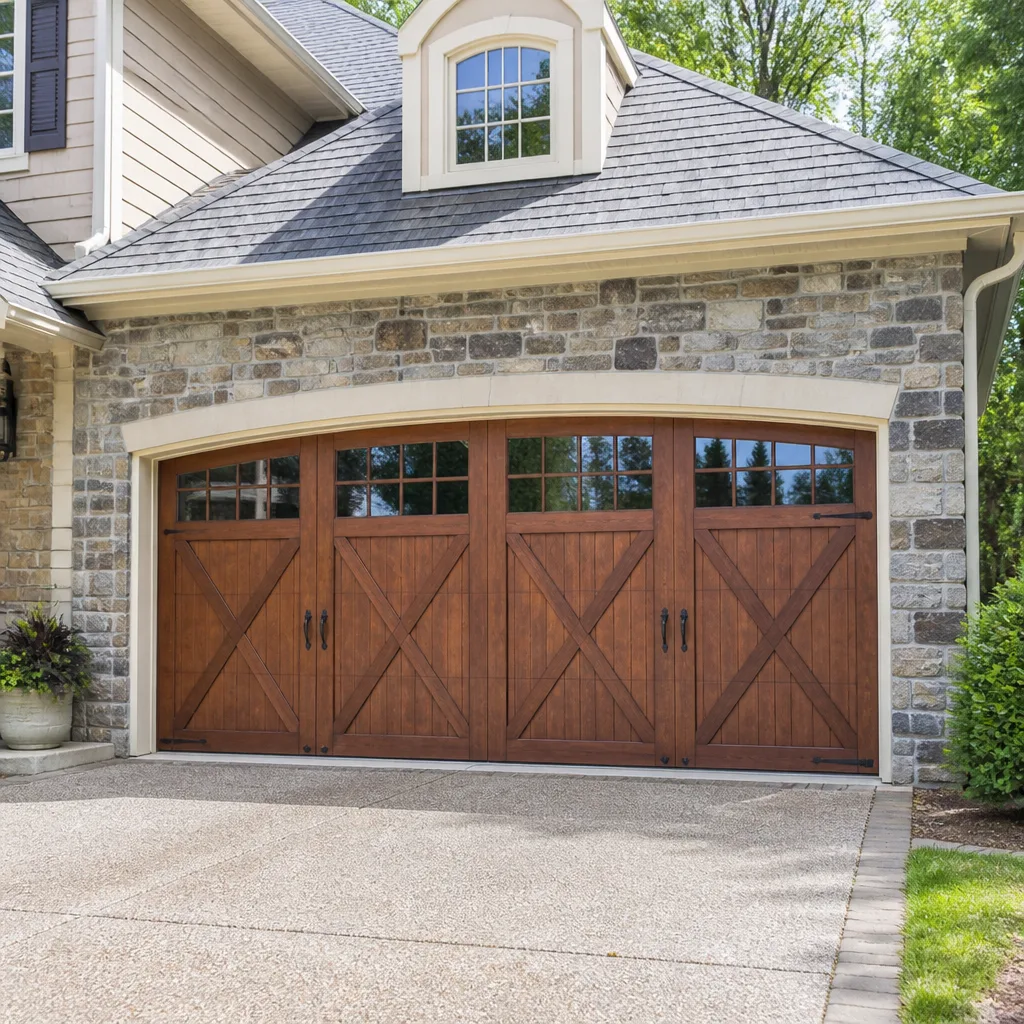 Carriage house
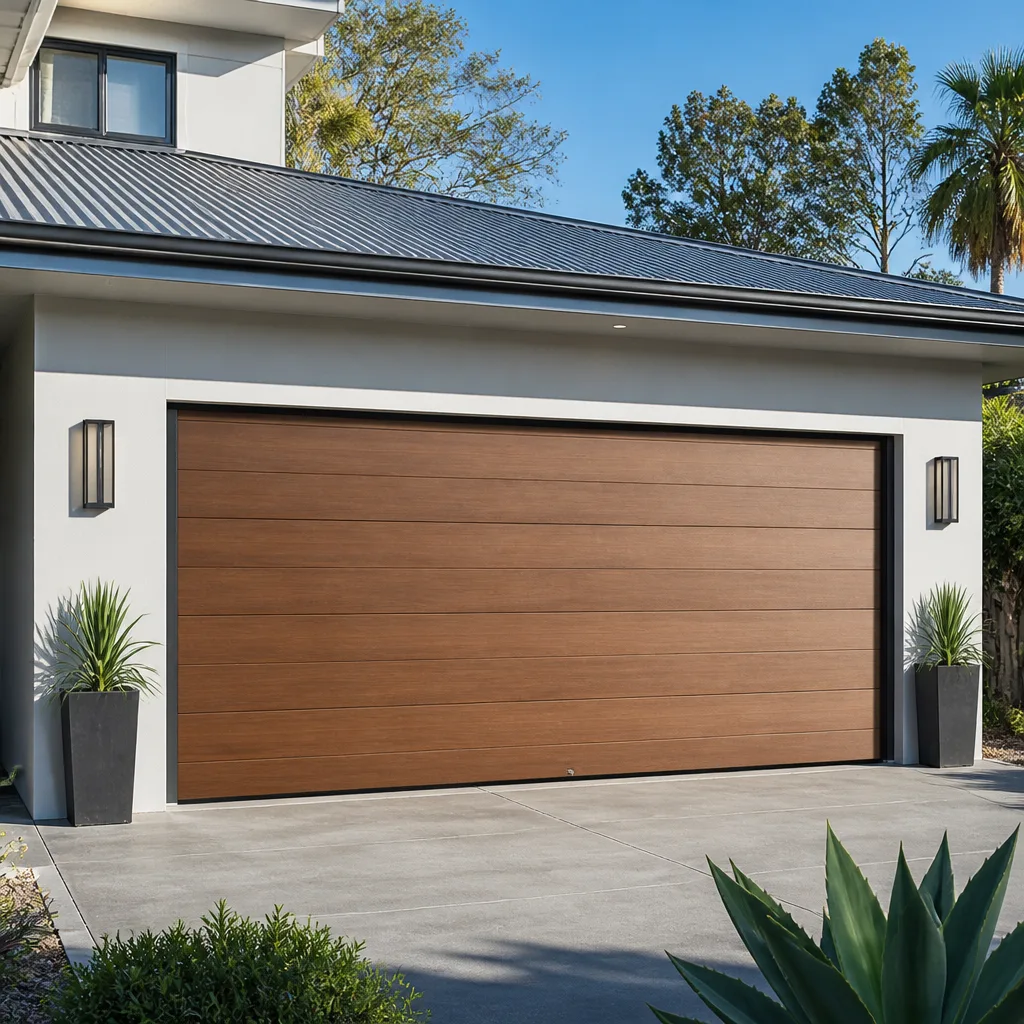 Modern flush
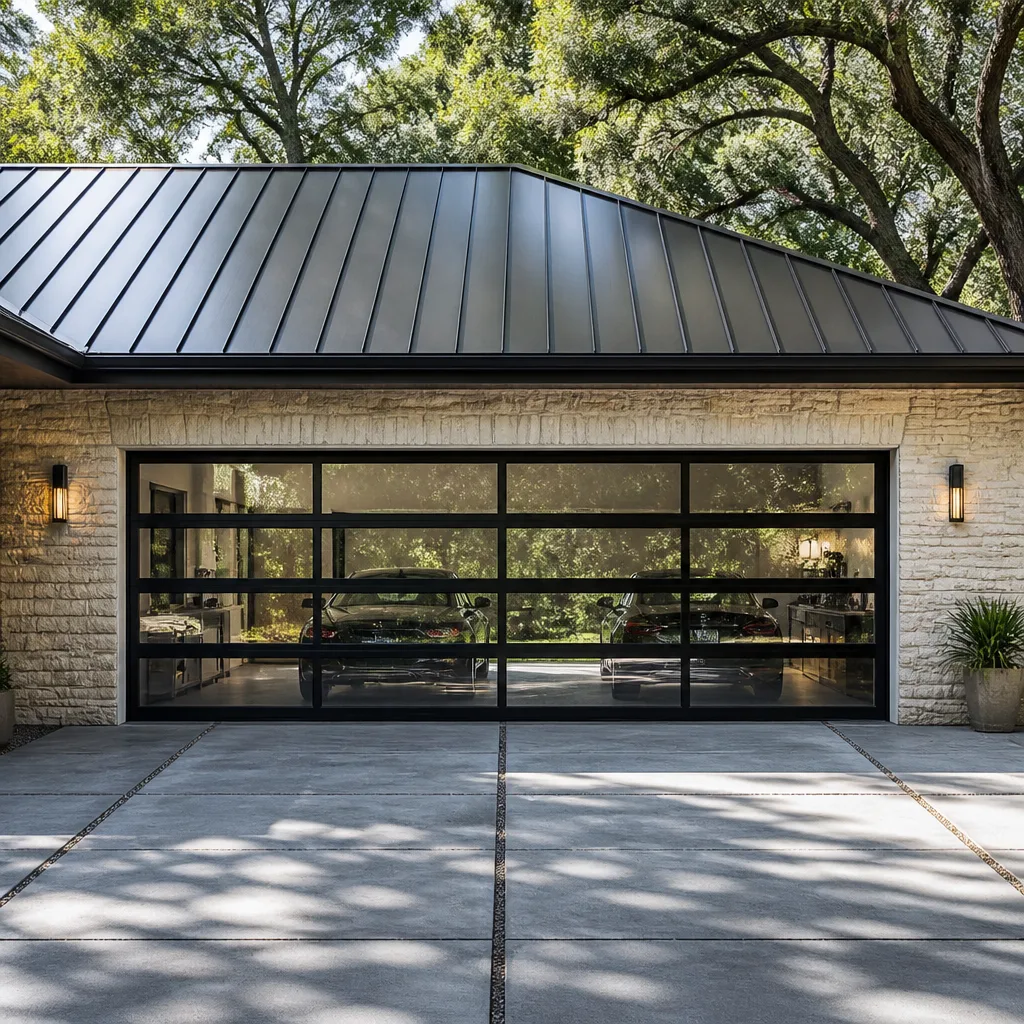 Full-view glass
 LiftMaster openers
 Chamberlain openers
Full 25-point door and opener safety check with every visit - springs, cables, rollers, tracks, and your LiftMaster or Chamberlain opener included
You get a price before we start. It does not change when the pro arrives.
Get your free estimateSeasonal Garage Door Care for Arlington Heights: Year-Round Homeowner’s Guide
Most garage door advice treats maintenance as one annual chore: lubricate, tighten, forget. In Arlington Heights, that advice misses the real problem. Your door doesn’t face one climate – it faces four. January lows and July highs in this part of Cook County can span more than 100°F across the year, and shoulder-season days here regularly swing 30°F or more between morning and afternoon. That range expands and contracts a steel track just enough to drift out of alignment, and the drift only shows up weeks later as a door that binds, bounces, or grinds. What follows breaks the year into four distinct mechanical conditions, each with its own failure mode and its own prep list, so you can act before a symptom turns into a service call.
Quick Answer
Seasonal garage door care in Arlington Heights means matching maintenance to four separate conditions: a freeze-thaw winter that stresses seals, lubricants, and spring tension; a swing-season spring and fall that shift track alignment through rapid temperature changes; and a hot, humid summer that pushes opener electronics. The single most useful habit is checking your door’s balance and track alignment at each season change, because a door that balances cleanly in October can strain your opener by February without a spring recalibration.
Styles & brands we work with
- Raised-panel steel
- Carriage house
- Modern flush
- Full-view glass
- LiftMaster openers
- Chamberlain openers
Table of Contents
- Why Arlington Heights Doors Face Four Seasons, Not One
- Pre-Winter Prep: The Three Components Freeze-Thaw Hits Hardest
- Why October’s Spring Tension Doesn’t Hold Through February
- Summer Heat and Your Opener’s Circuit Board
- Fall Debris in the Tracks: The Alignment Cause Homeowners Miss
- A Month-by-Month Task Calendar for Arlington Heights
- What to Check Yourself and What to Leave Alone
- Common Mistakes to Avoid
Why Arlington Heights Doors Face Four Seasons, Not One
A garage door is a mechanical system made of steel, aluminum, wood, or composite panels, hung on tension and guided by track. Every material in that system responds to temperature differently, and they respond at different rates. Steel track, torsion springs, and vinyl seals don’t expand and contract in step with each other.
In Arlington Heights, that matters more than in a mild climate because the swing is large. The gap between a deep January cold snap and a July heat wave can exceed 100°F, and the shoulder months – roughly March into May and September into November – bring individual days that jump 30°F or more. Those single-day swings are the ones that quietly move things. A metal track fastened to a garage wall will lengthen slightly in afternoon warmth and contract overnight, and over a season that small movement can pull a track out of parallel with its partner.
The consequences show up as symptoms people describe differently: a door that rubs on one side, a section that catches, a roller that squeals only in the morning. None of these are emergencies on day one. All of them get worse on a schedule.
We think about it as four mechanical conditions rather than four calendar seasons:
- Freeze-thaw winter – seals stiffen, lubricants thicken, springs work against more resistance.
- Wet swing season – rapid temperature change moves track and hardware alignment.
- Hot, humid summer – opener electronics run warm, seals soften, wood panels swell.
- Dry, debris-heavy fall – leaves, grit, and seed pods collect in tracks and rollers.
Once you see it that way, “annual maintenance” stops making sense. A door inspected once a year gets checked in one condition and neglected in the other three. Our Arlington Heights Garage Door Repair Pros technicians have up to 9 years of experience, and most of the mid-season failures we see trace back to a component that was fine in one condition and never re-checked in the next.
Pre-Winter Prep: The Three Components Freeze-Thaw Hits Hardest
Three components take the brunt of an Arlington Heights winter: the bottom seal, the lubricant in your moving parts, and the torsion spring under tension at the top of the door. Each one behaves differently once temperatures drop below freezing and start cycling above and below that line.
The bottom seal
The bottom seal is a flexible strip along the lower edge of the door, and it’s the part closest to the cold floor and the snowmelt that finds its way under the door. Vinyl and rubber seals stiffen in cold, and a stiff seal stops conforming to the floor. You get a visible gap, cold air and moisture move in, and the seal itself begins to crack at the corners where it flexes most. Freeze-thaw repeats that flexing cycle over and over through the winter.
Check the seal in late fall before the first hard freeze. Run a hand along the underside with the door closed and feel for hard spots, splits, or sections that no longer touch the floor. A seal that’s already cracking in October will be failing by January.
Lubricant viscosity
Every roller, hinge, and bearing on the door depends on a film of lubricant. Most general-purpose oils and greases thicken as temperature falls, and a grease that flows easily at 60°F can turn nearly solid at 15°F. When that happens, rollers stop turning and start skidding, hinges stiffen, and the whole door becomes harder to move. The opener then works harder to lift the same weight.
The fix is straightforward: use a lubricant rated for cold conditions, and apply it in fall rather than waiting for a symptom. A light lithium- or silicone-based lubricant on rollers, hinges, and the bearing plates holds up better through a Cook County winter than heavy grease. Don’t lubricate the tracks themselves – they’re meant to stay clean and dry so rollers roll rather than slide.
Torsion spring tension
Torsion springs are the two coiled springs mounted on a shaft above the door, and they carry the door’s weight so the opener only has to guide it. Steel behaves predictably in cold: it becomes slightly less ductile, and the number of cycles the spring can comfortably handle per day drops. A spring that’s already near the end of its cycle life is more likely to fail in the first cold snap of the season than in mild weather.
You can’t safely inspect or adjust torsion springs yourself. The tension stored in them is enough to cause serious injury, and the correct adjustment requires winding bars and a specific technique. What you can do is listen: a door that sounds louder or heavier in cold weather than it did in fall is telling you the spring is working harder than it should. That’s the point to have a technician check it, not the point to try adjusting it with a wrench.
Pre-winter prep is also the right time to schedule a professional balance check. A trained eye catches a spring that’s losing tension before it fails, and our garage door spring repair service handles that inspection and any replacement as a standalone job because springs are the highest-risk component on the whole system.
Why October’s Spring Tension Doesn’t Hold Through February
Here’s a pattern we see repeatedly: a door is adjusted in October, balances beautifully, and by February it bounces at the bottom, hesitates at the top, or makes the opener strain. Nothing broke. The tension simply wasn’t recalibrated for the cold condition.
A torsion spring is calibrated to lift a specific door weight with a specific number of turns. When the temperature drops, several things change at once:
- The door’s own panels and frame contract slightly, changing the load the spring is lifting.
- The lubricant film thickens, adding resistance the spring has to overcome.
- The steel of the spring itself behaves differently in cold, and the same number of turns produces a slightly different feel at the door.
The result is a door that’s technically still tensioned but out of balance for the conditions. The opener motor picks up the difference. You’ll notice it as a door that runs slower, a motor that sounds labored, or a door that reverses before it fully closes. Left alone for a full winter, that extra strain shortens the life of the opener’s gears and can contribute to premature opener failure.
The right approach is a balance check at the season change, not a one-time adjustment. Here’s how that check works when a technician performs it:
- Disconnect the opener so the door is being moved by hand only.
- Raise the door to roughly halfway and let go.
- A balanced door stays put or drifts very slowly. A door that drops or rises on its own is out of balance.
- Recheck the spring tension and adjust for the current condition.
- Reconnect the opener and confirm the door runs smoothly through a full cycle.
A word of caution: the halfway test should be done with the opener disconnected and no one standing under the door, and any adjustment to the springs themselves belongs with a trained technician. We don’t recommend homeowners wind or unwind torsion springs. The stored energy is genuinely dangerous, and a slipped winding bar can cause serious injury in an instant. A balance check tells you whether you need help; the repair is the professional’s job.
Our garage door repair service includes a balance assessment on every visit, because an out-of-balance door is the most common root cause behind the symptoms people call us about.
Summer Heat and Your Opener’s Circuit Board
Your garage opener lives in one of the hottest spots in the house during an Arlington Heights summer. A garage without air conditioning can run warmer than the outdoor temperature, and the opener’s motor, transformer, and circuit board all sit right up in that heat while generating their own.
Opener electronics fail in two distinct patterns, and knowing which one you’re seeing changes what to do about it.
Heat stress symptoms
Heat stress shows up as intermittent behavior that gets worse on the hottest afternoons and better overnight or on cool mornings. The classic signs:
- The door opens fine in the morning and won’t respond in late afternoon.
- The opener clicks or hums but doesn’t move the door.
- Wall controls work but the remote doesn’t, or the reverse.
- The opener stops partway and reverses for no obvious reason.
- Behavior settles down after the garage cools off.
Intermittent behavior that tracks with temperature is a strong indicator of an electronic issue – a marginal capacitor, a solder joint, or a circuit board component that’s drifting with heat. It’s not a door problem and it’s not a motor problem.
Failing motor symptoms
A motor that’s actually failing behaves differently. It struggles consistently rather than intermittently. The door moves slowly, the motor sounds labored in any weather, and the problem gets steadily worse rather than coming and going with the temperature. A failing motor will also overheat and shut itself down, but it does so after a full cycle rather than at random.
Smart openers from LiftMaster and Chamberlain and older legacy units like a Craftsman model both sit in hot garages, and both can show heat-related electronics symptoms. Brand-specific diagnosis matters here: the logic and safeties differ across manufacturers, and knowing the model family tells a technician where to look before opening the housing. That’s why our garage door opener repair covers the full range of installed openers, from Wi-Fi integrated systems to legacy models still running strong.
Two practical steps for summer: check that nothing is stacked against or on top of the opener motor, and clear any dust or debris from its vents. Both are airflow issues, and airflow is what keeps the electronics within their operating range.
Fall Debris in the Tracks: The Alignment Cause Homeowners Miss
When homeowners notice a door that’s started to bind, scrape, or run unevenly, they usually look at the springs or the opener. In our experience, a large share of those cases trace back to something simpler: debris in the tracks.
Arlington Heights sits among mature trees, and a fall season delivers a steady supply of leaves, twigs, and grit into any garage that opens and closes through the season. The tracks are a channel, and anything that falls into that channel collects at the bottom where the door closes. That debris does two things:
First, it gets in the way of the rollers. A roller that hits a twig or a mat of wet leaves stops rolling cleanly, skips, and wears the track surface. Second, wet debris left in the track over a freeze dries into a hard deposit that alters the smooth surface the roller depends on. A roller riding on grit works like a slow abrasion, and the wear pattern on the track starts to affect how the door seats.
The alignment connection is what people miss. As rollers ride over debris unevenly, the load on the door changes side to side. The door starts track slightly toward the side with more resistance. That slight offset compounds over a month or two, and by the time the door is visibly binding, the track itself has moved enough to need adjustment. What started as leaves in the track ends as a track alignment job.
A monthly two-minute inspection through fall is the whole preventive measure:
- Open the door fully and look down the length of both tracks from the bottom.
- Clear any leaves, twigs, or grit with a brush or a vacuum hose. Don’t use a wet rag that leaves the track damp.
- Wipe the track surface with a dry cloth if you see deposits.
- Roll each roller by hand to confirm it turns freely.
- Check that nothing has shifted at the brackets holding the track to the wall.
That last step is the one to skip if you’re not sure. The track brackets hold the alignment in place, and adjusting them without the right reference points can make alignment worse. In dry fall weather, a Wayne Dalton or Raynor door tracking cleanly one month and binding the next is usually a debris and alignment story, not a hardware failure.
A Month-by-Month Task Calendar for Arlington Heights
Generic Midwest care calendars assume a mild autumn and a short winter. Arlington Heights sits in a climate where a warm October day can be followed by an early hard freeze, and where a single March day can swing 30°F between morning and afternoon. This calendar is keyed to how the door is likely to behave when, not to a generic calendar.
Late fall (October into November): the winter setup
- Inspect and, if needed, replace the bottom seal before the first hard freeze.
- Lubricate rollers, hinges, and bearing plates with a cold-rated lubricant.
- Test the door’s balance with the opener disconnected. If it doesn’t hold position, schedule a spring assessment.
- Test the safety reverse by placing a solid object in the door’s path and confirming the door reverses.
- Clear and dry the tracks, and confirm the rollers turn freely.
Winter (December through February): listen and observe
- Watch for a door that sounds louder or heavier than it did in fall; that’s the cold-load symptom.
- Keep snow and ice from packing against the bottom seal so the seal isn’t frozen to the floor.
- Don’t force a frozen door; disconnect the opener and check for ice at the seal before running it.
- Note any opener hesitation and schedule a balance check rather than ignoring it until spring.
Early spring (March into April): the swing-season reset
- Check track alignment after the first extended warm period; the temperature swing is when drift shows.
- Run a full balance test. This is the point where a February adjustment may need recalibrating for warmer conditions.
- Inspect the bottom seal for cracking from the winter cycles.
- Re-lubricate moving parts, since winter cold pulls lubricant film away faster.
Late spring (May): the summer setup
- Clear the opener’s vents and confirm airflow around the motor housing.
- Test the safety reverse again (a spring and fall habit, not a once-a-year one).
- Check that weatherstripping around the frame is still seated and not pulling away.
Summer (June through August): heat-stress watch
- Note intermittent opener behavior on hot afternoons; that’s heat stress, not a dead motor.
- Check that wood components haven’t swollen and begun to drag; a wood door is more sensitive to summer humidity than a steel one.
- Confirm the door still balances – warm lubricant can make a slightly weak spring feel fine when it isn’t.
Fall (September into October): the debris defense
- Clear the tracks weekly through leaf season.
- Check rollers for flat spots or skipped sections.
- Test the balance again before the winter prep tasks begin.
- Schedule a full professional check if the door has developed any binding or scraping.
What to Check Yourself and What to Leave Alone
Some seasonal care is genuinely homeowner work. Some of it involves stored mechanical energy or electrical systems that can hurt you, and the right move there is a professional. Here’s a clear split.
Safe for you
- Clearing leaves, grit, and debris from the tracks.
- Wiping the tracks dry and checking that rollers turn freely by hand.
- Applying cold-rated lubricant to rollers, hinges, and bearing plates.
- Testing the safety reverse with a solid object.
- Inspecting the bottom seal for cracking or gaps.
- Checking airflow around the opener motor and clearing vents.
- Running the balance test with the opener disconnected (no one under the door).
Leave to a trained professional
- Torsion spring adjustment or replacement. The stored energy in a torsion spring is enough to cause serious injury, and a slipped winding bar can cause a hand injury in less than a second. No amount of caution makes a homeowner spring adjustment a safe task.
- Track bracket adjustment. Track alignment is a reference-point job. Moving a bracket without a reference can push the door further out rather than back into alignment.
- Opener electrical work. Any work inside the opener housing or at the wall control wiring involves line voltage. Even after the breaker is off, capacitors inside the unit can hold a charge.
- Balance tests that turn up a problem. The test itself is safe. Diagnosing and fixing what an out-of-balance result tells you is a professional job.
We’ve seen the difference between a homeowner who runs a balance check every season and one who doesn’t, and it usually shows up as spring and opener life. A trained technician can catch a spring losing tension before it fails, and catching it early is far less disruptive than a call from a door that’s stuck at an angle.
Common Mistakes to Avoid
- Treating maintenance as one annual event. A door tuned up in spring faces three more seasonal conditions over the following year, and a single check leaves the freeze-thaw and heat-stress seasons unaddressed. Match care to all four conditions.
- Lubricating the tracks. The tracks are designed to stay clean and dry so rollers roll rather than slide. Oil or grease in the tracks collects grit and makes alignment problems worse.
- Skipping the balance test because the door “seems fine.” A door can feel normal by hand and still be out of balance enough to strain the opener. The test takes two minutes with the door disconnected, and it’s the earliest warning you’ll get.
- Assuming a hot-afternoon opener glitch means the motor is dead. Intermittent failure that clears when the garage cools is usually electronics, not the motor, and replacing the unit before the right diagnosis wastes a working opener.
- Ignoring leaves in the tracks through fall. Debris that’s cleared in a week is a five-minute job. Debris that’s left through a freeze becomes an alignment adjustment.
- Adjusting torsion springs yourself. The most common DIY mistake isn’t a wrong setting – it’s a serious injury. Leave the springs to a trained technician and let the balance test tell you when to call.
- Forcing a frozen door with the opener. Running the motor against ice at the bottom seal can strip the opener’s gear or stall the motor. Clear the ice first, then run it.
When to Call a Professional
Some seasonal care is a homeowner job, and some of it isn’t. Call a professional when any of the following shows up:
- A door that drops or rises on its own during the disconnnected balance test.
- A door that has begun binding, scraping, or tracking unevenly after a seasonal temperature swing.
- A loud snap from above the door, followed by a door that won’t lift – the classic broken-spring symptom.
- An opener that’s failed repeatedly on the hottest afternoons, or that runs the door slowly even when the garage is cool.
- Any torsion spring that’s already been in service for years and is behaving differently as cold weather arrives.
- A door that’s come off the track entirely, which is not a tomorrow problem – it’s a call-now problem.
For the emergency categories, we don’t recommend waiting for the next open appointment. A stuck door that can’t be opened from the outside, or a door hanging off the track, is a security and safety issue for the whole household. Our technicians have up to 9 years of experience, and we work on the brands most homes in this area have installed, so there’s no learning curve when we arrive. Arlington Heights Garage Door Repair Pros offers free estimates in Arlington Heights – call (877) 460-4338.
See the difference
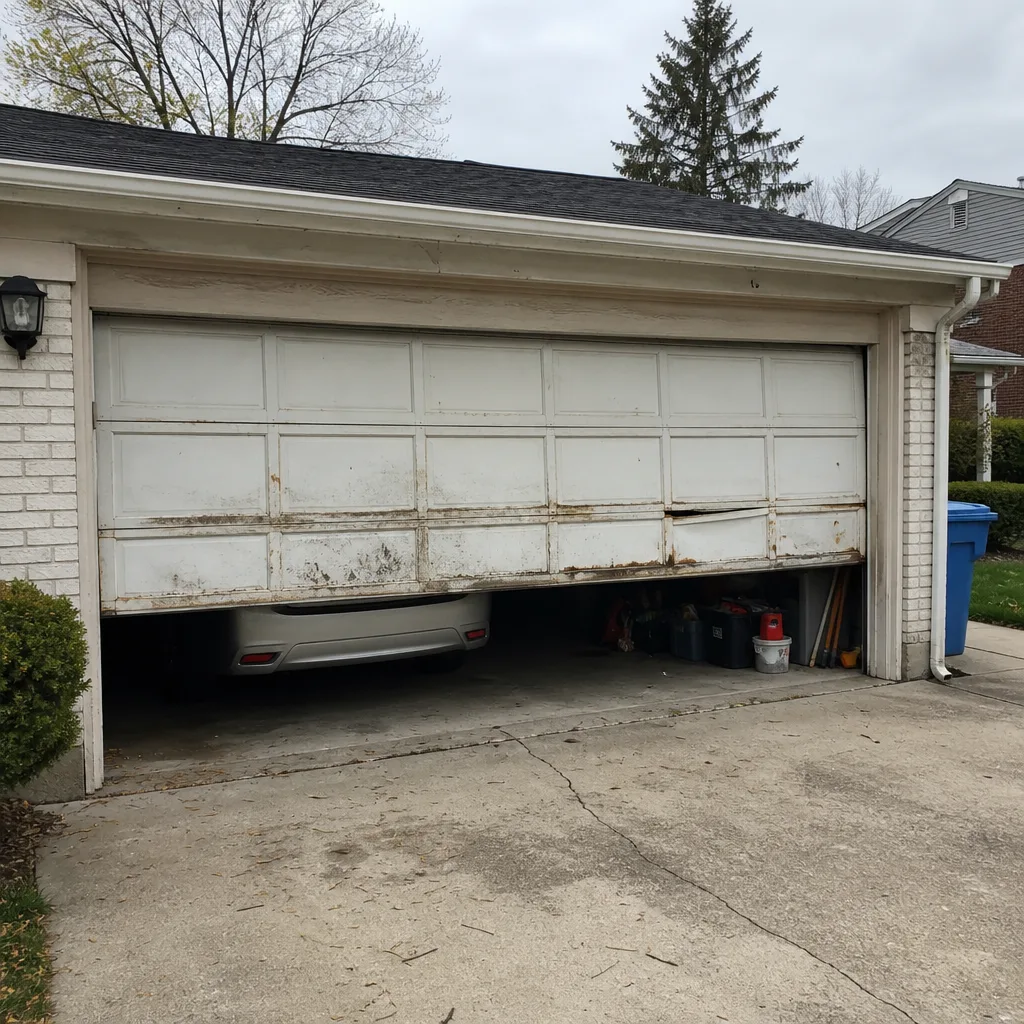 Before
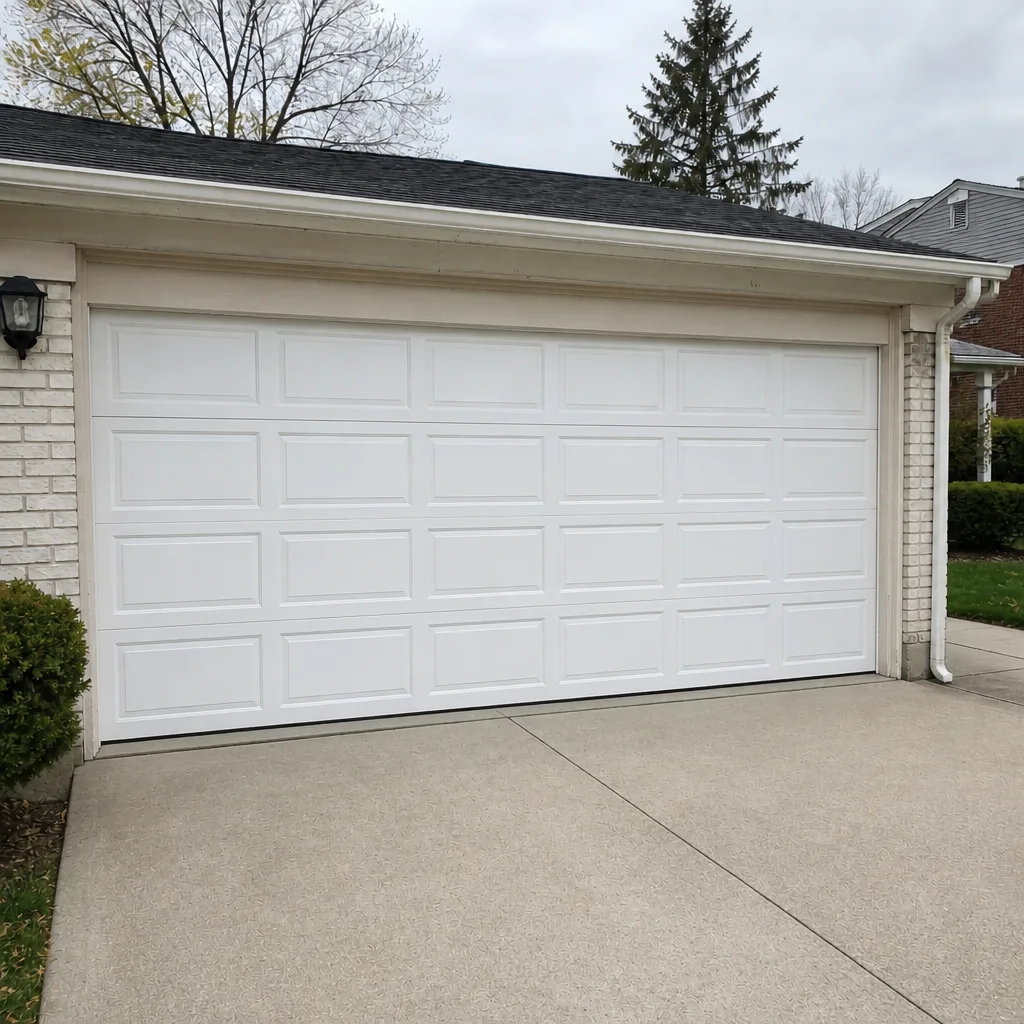 After
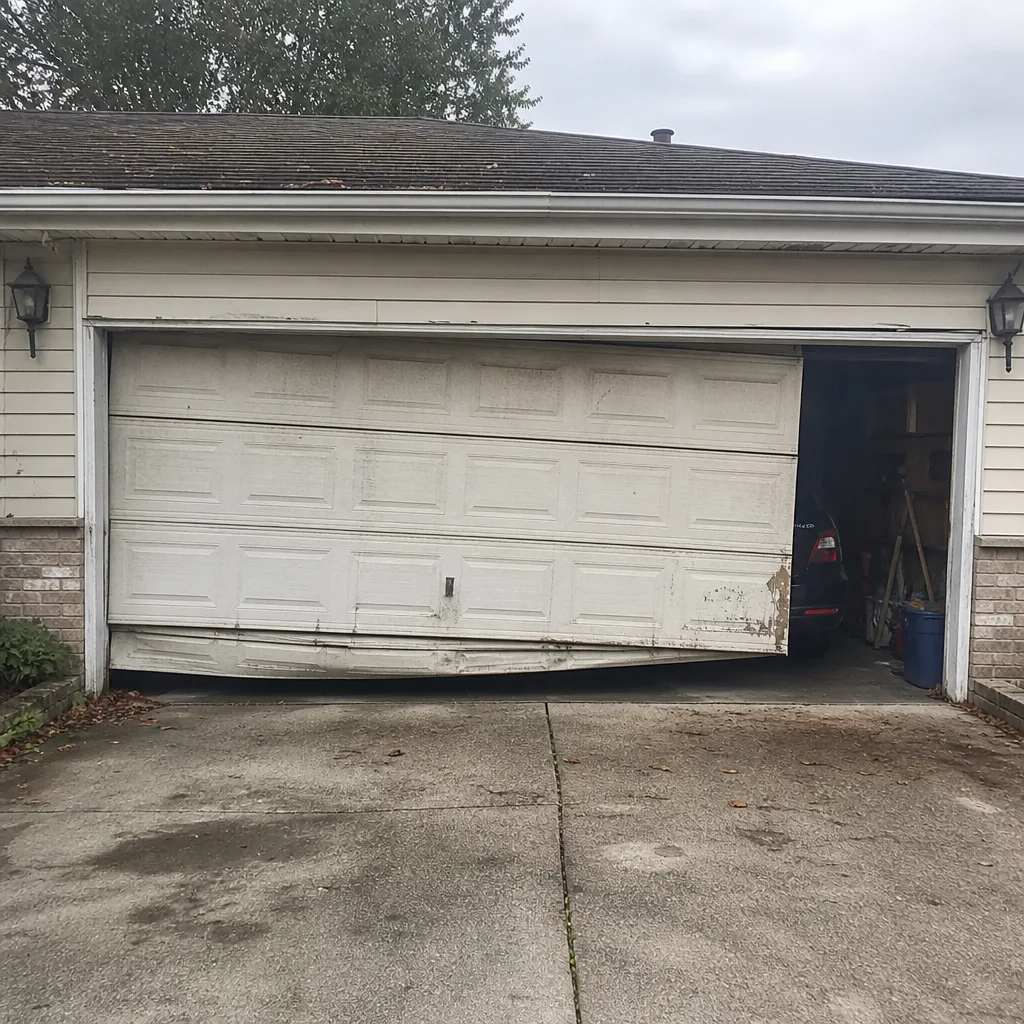 Before
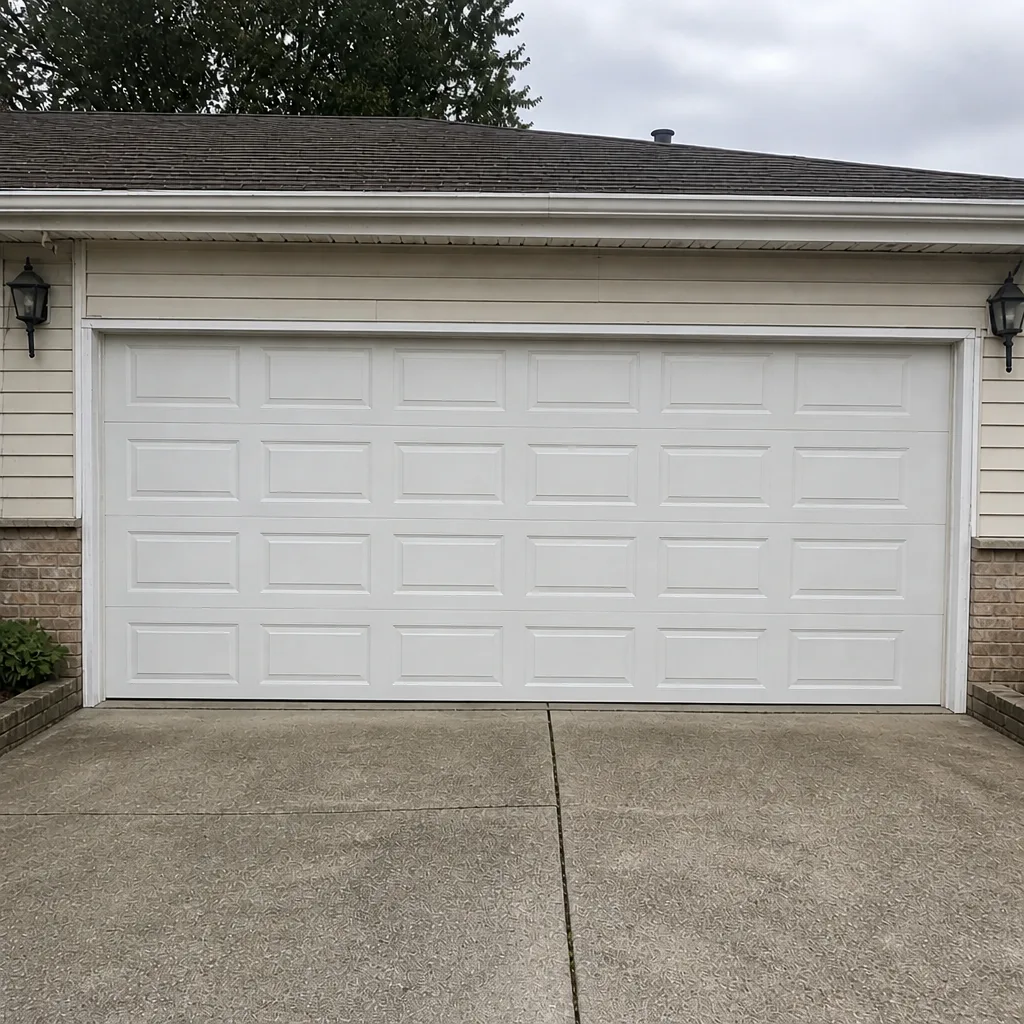 After
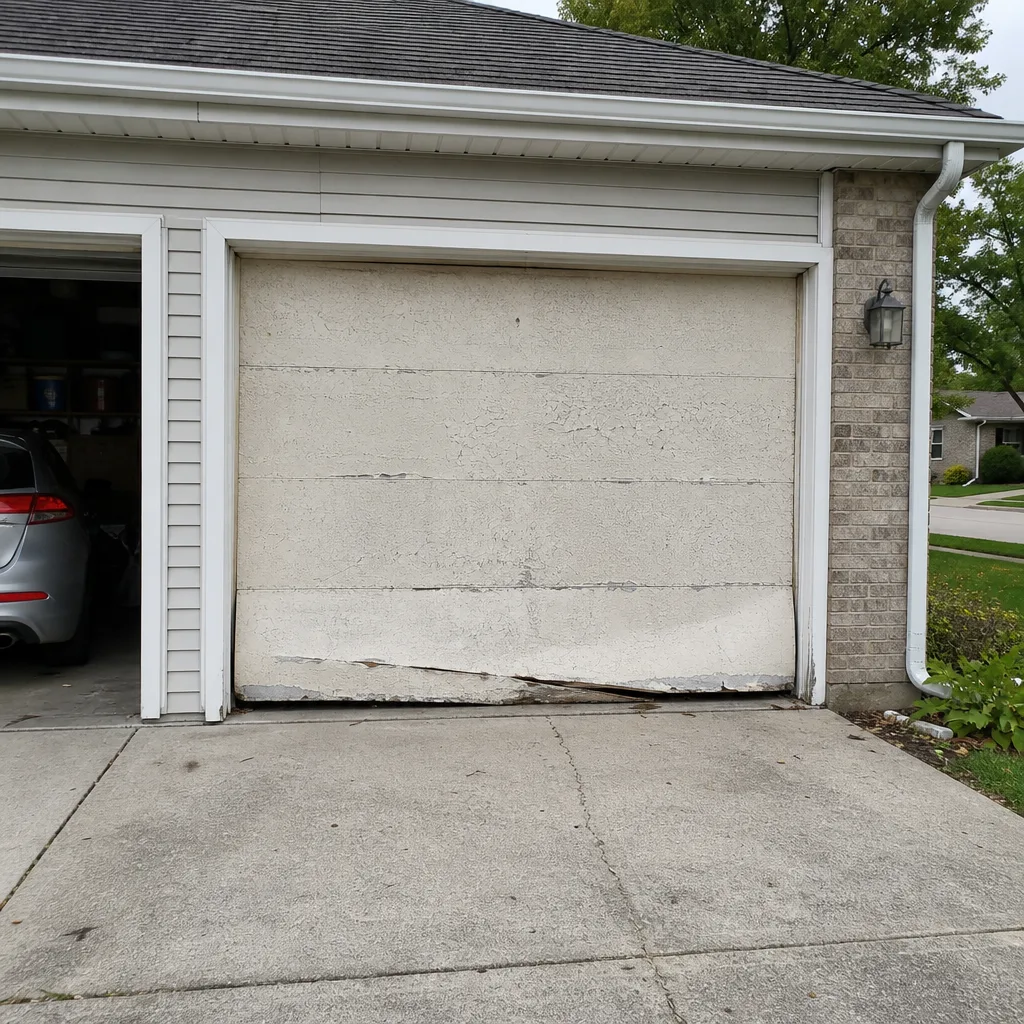 Before
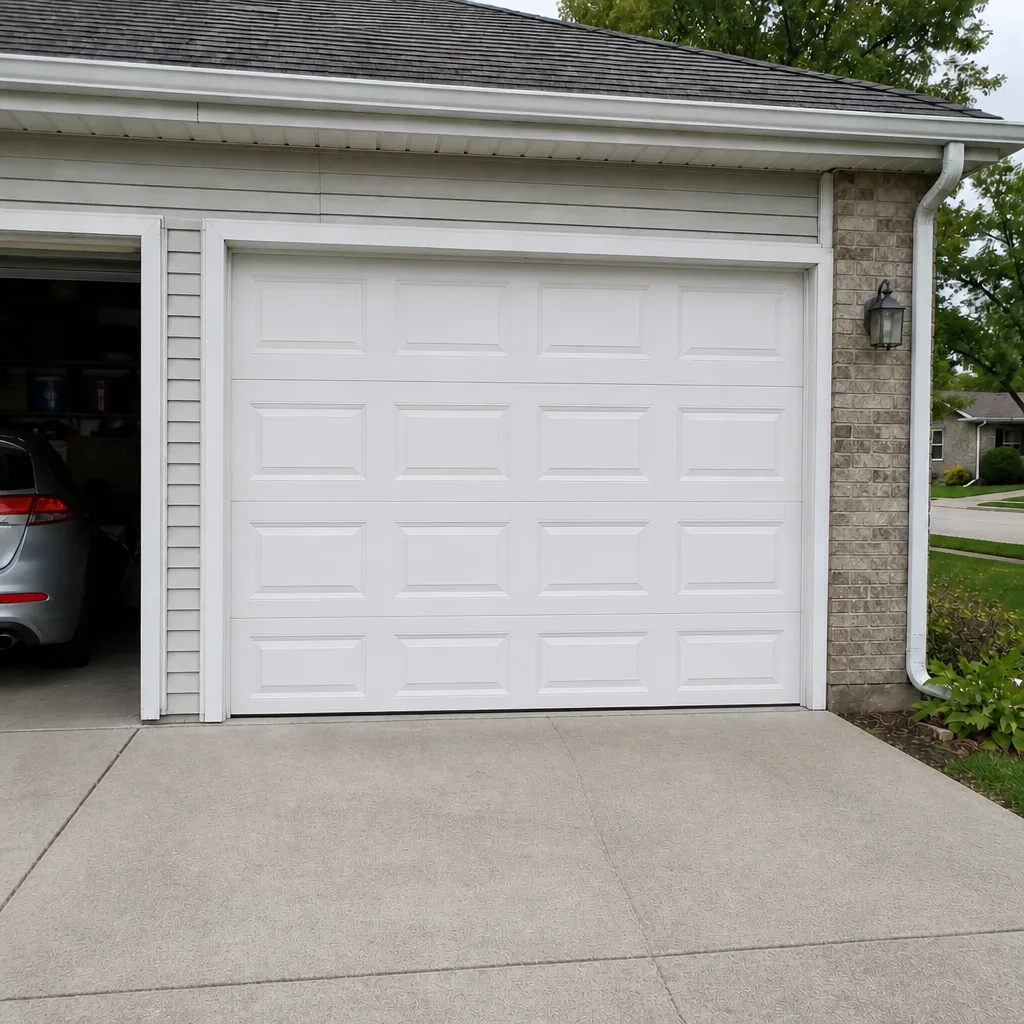 After
Frequently Asked Questions
At each season change, roughly four times a year, not once. The temperature swings in Arlington Heights move track alignment, spring tension, and lubricant viscosity enough that a door that’s fine in October can be out of balance by February, and a door that’s fine in May can show heat-stress symptoms in July. A quick self-check at each change, plus a professional balance check in late fall, catches most of what goes wrong.
Cold weather thickens lubricant, stiffens the bottom seal, and changes the load the torsion spring is lifting. The combined effect is a door that needs more force to move, and the opener is the component that ends up providing it. If the door feels noticeably heavier in cold weather, it’s a signal that the spring needs a balance check before winter sets in.
The heat alone doesn’t destroy openers, but it stresses the electronics and reveals marginal components. A capacitor or circuit board that’s already weakening will misbehave in the heat and run fine when the garage cools, which is why hot-afternoon failures that clear overnight point to electronics rather than the motor. A dying motor fails consistently in any weather; that’s the distinction to watch for.
No. Torsion springs store enough energy to cause serious injury, and a winding bar that slips out of position can break a hand or worse before you can react. There’s no safe DIY adjustment. The safe homeowner role is the balance test with the opener disconnected; the adjustment itself needs a trained technician with the right tools.
Debris in the tracks, more often than a hardware failure. Leaves, twigs, and grit collect in the channels through the fall, and as rollers ride over the debris unevenly, the door begins tracking toward the side with more resistance. That slight offset compounds over a month or two and shows up as binding. Weekly track clearing through leaf season is the easiest fix, and cleaning the tracks is the first thing to check before assuming a hardware problem.
Not necessarily. A unit that fails intermittently on hot afternoons and works normally when the garage cools may only need a specific electronic component repaired, or even just better airflow around the housing. A brand-specific diagnosis comes first, and replacement is the answer only when the unit itself is at fault. Our opener repair service covers the full range from Wi-Fi units like LiftMaster and Chamberlain to legacy Craftsman and Genie models.
The Bottom Line
Seasonal garage door care in Arlington Heights isn’t a once-a-year tune-up. It’s a set of responses matched to four distinct conditions: a freeze-thaw winter that stiffens seals and thickens lubricants, a swing season that moves track alignment through rapid temperature change, a summer that stresses opener electronics, and a fall that fills tracks with debris. The single habit that pays back the most is a two-minute balance check at each season change, done with the opener disconnected. Pair that with weekly track clearing through fall, cold-rated lubrication before winter, and added airflow around the opener in summer, and you’ll catch most problems while they’re still small. The three jobs to leave to a professional are torsion springs, track bracket adjustment, and anything inside the opener housing, all of which carry real risk without the right tools and training.
Frequently Asked Questions (Continued)
It exposes them. A torsion spring that’s near the end of its cycle life is more likely to fail in cold weather because the steel behaves with less ductility and the resistance on the door is higher. If your springs are aging and the door has been behaving differently as the weather turns cold, that’s a good time to have them checked rather than wait for a snap. We handle spring replacement as a standalone service because it’s the most mechanically complex and safety-critical repair on the door, and it deserves the focus.
A bounce at the bottom usually signals a door that’s out of balance for cold conditions. October’s adjustment doesn’t account for the load changes cold weather brings, and a door that lands with a bounce means the spring isn’t lifting its share of the door weight. Let it bounce through a full winter and the opener, the bottom seal, and the panels all take extra stress. A balance check followed by a spring recalibration usually resolves it.
Clearing the tracks is a homeowner task. Open the door fully, look down both tracks from the bottom, and clear leaves, twigs, and grit with a dry brush or vacuum. Wipe out any visible deposits with a dry cloth. The one thing to leave alone is the brackets that hold the track to the wall; adjusting those is a reference-point job, and moving one without a reference can worsen alignment.
In our experience, the pattern runs: broken torsion springs in the first hard cold snap, doors that fail the balance test after a winter of cold-load running, and frozen bottom seals that prevent the door from closing flat. The pre-winter checklist – seal inspection, cold-rated lubricant, and a balance check – minimizes all three.
If your door is showing any of the symptoms in this guide, or if it’s been through a full year without a professional look, we can help. Our team is factory-familiar with LiftMaster, Chamberlain, Genie, Clopay, Amarr, Wayne Dalton, Craftsman, and Raynor systems, and we cover repair, opener repair, spring repair, installation, and emergency service under one specialist. Call (877) 460-4338 for a free estimate, and we’ll tell you what your door needs before any work starts.
Written by the team at Arlington Heights Garage Door Repair Pros.