Last updated November 22, 2026
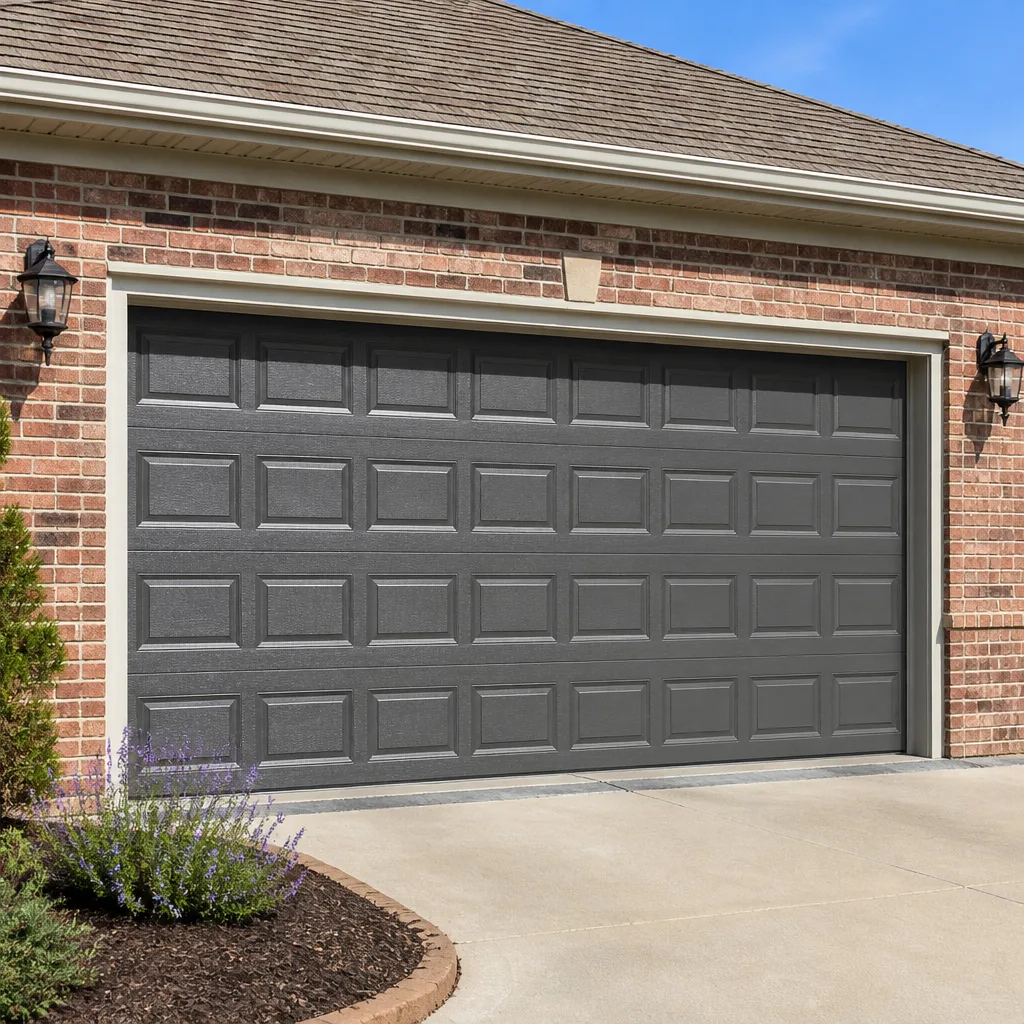 Raised-panel steel
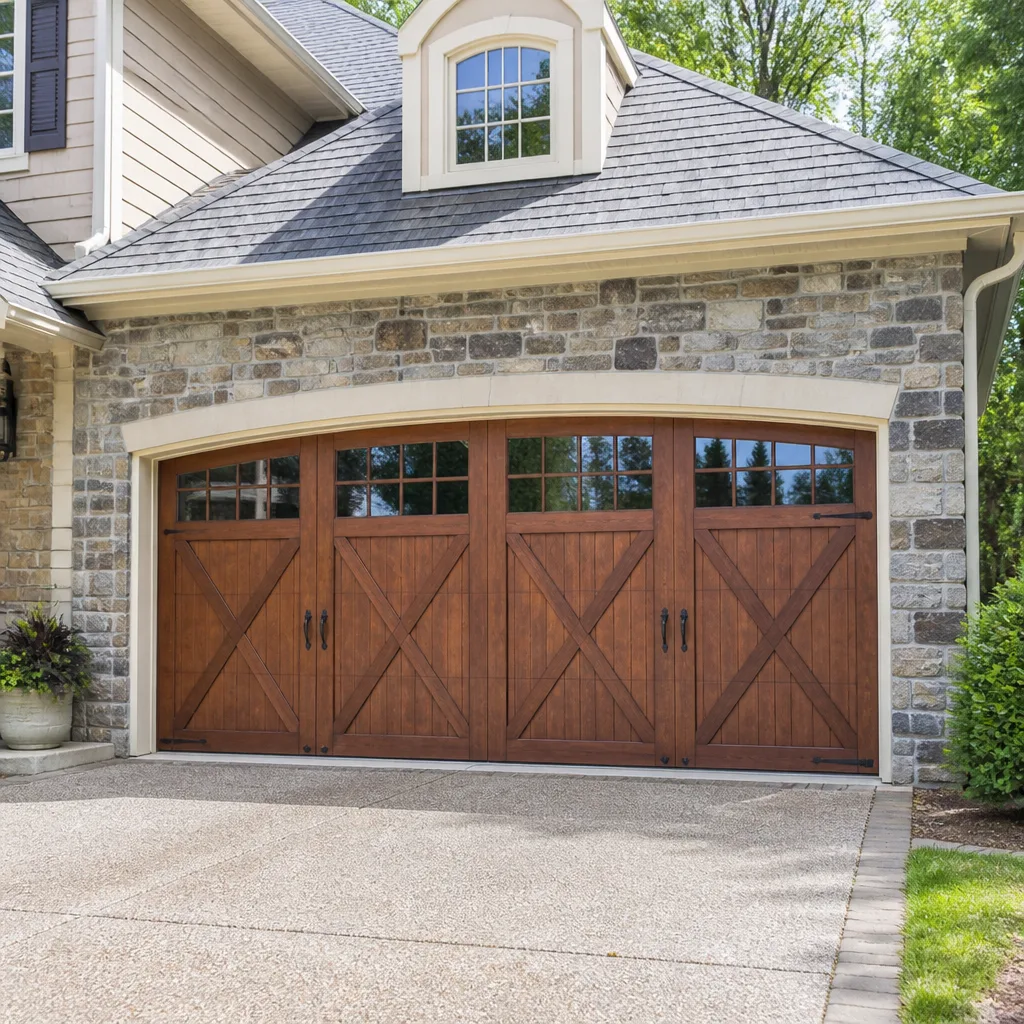 Carriage house
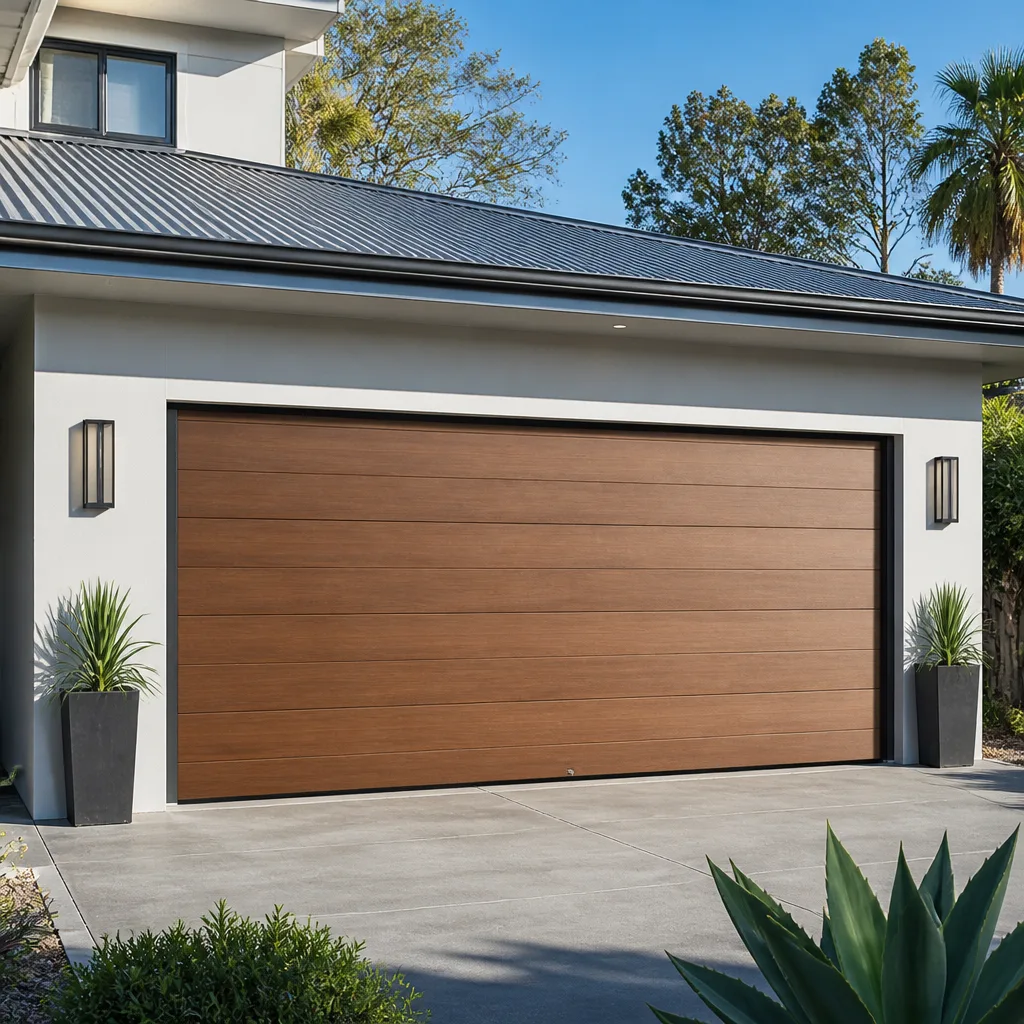 Modern flush
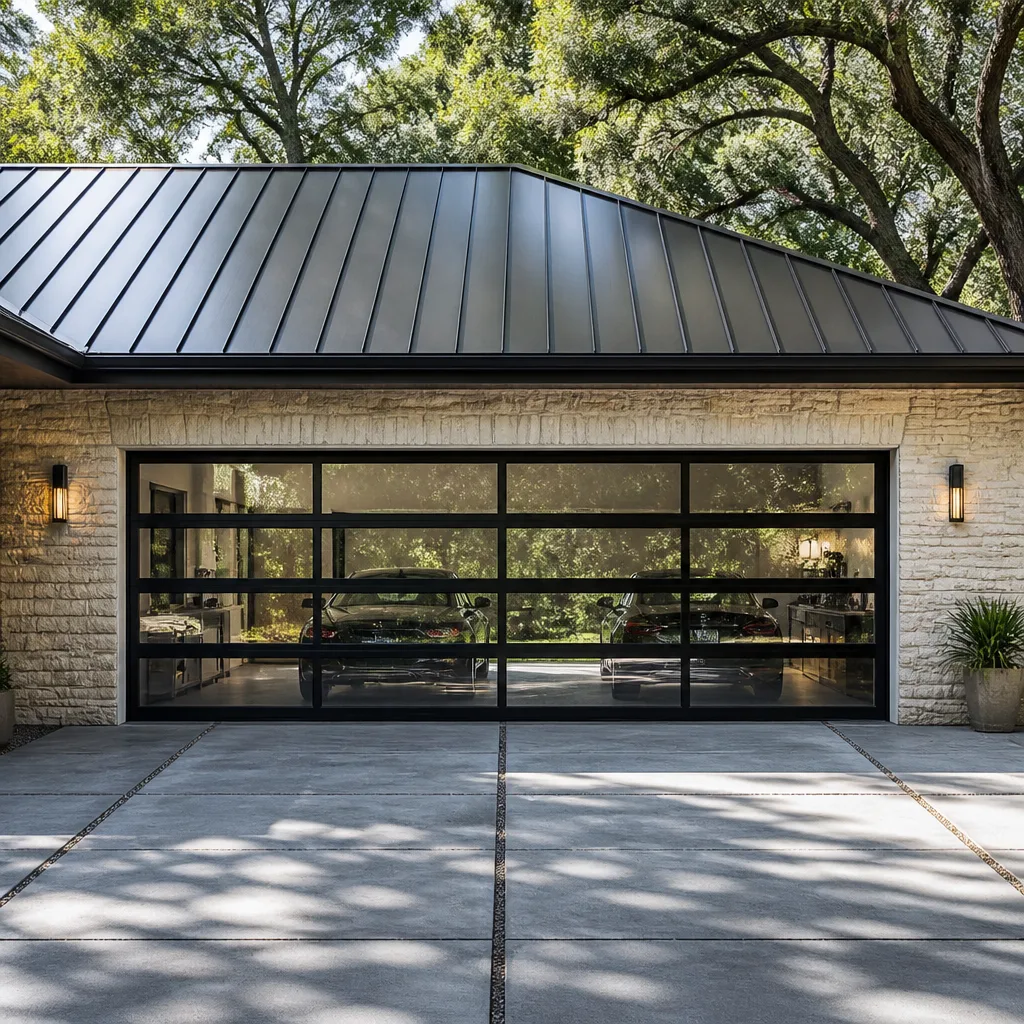 Full-view glass
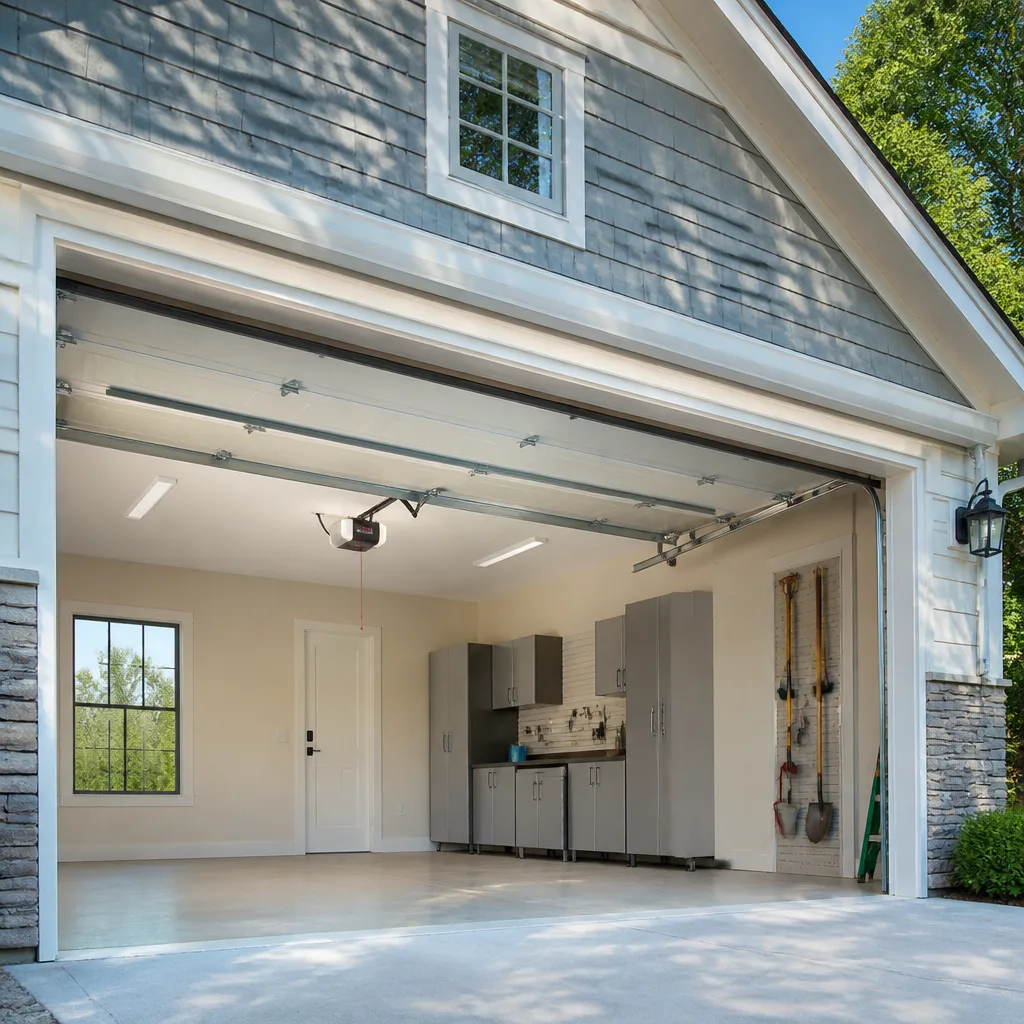 LiftMaster openers
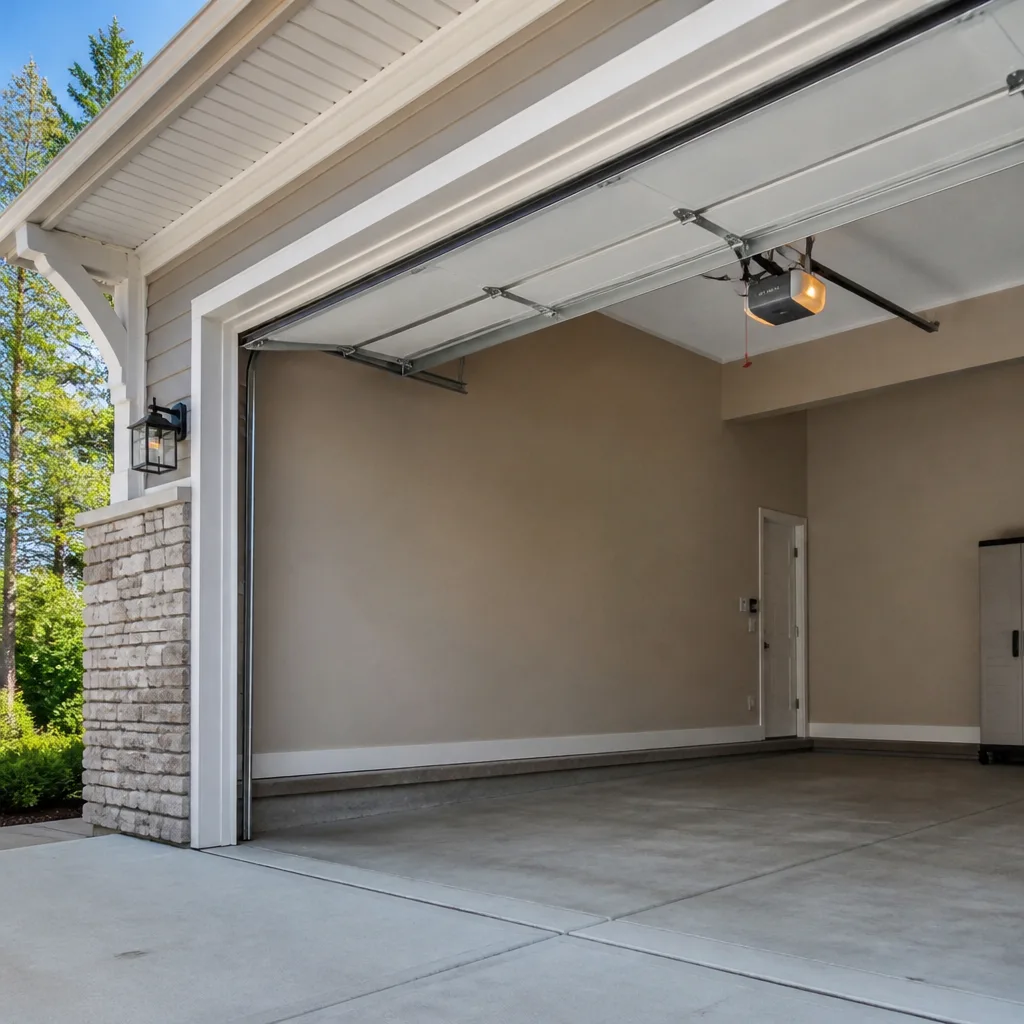 Chamberlain openers
Full 25-point door and opener safety check with every visit - springs, cables, rollers, tracks, and your LiftMaster or Chamberlain opener included
You get a price before we start. It does not change when the pro arrives.
Get your free estimateThe Complete Guide to Garage Doors in Arlington Heights
Most homeowners in Arlington Heights replace their garage door once every 15 to 20 years. Which means the last time you made this decision, smartphones didn’t exist, torsion spring systems looked completely different, and nobody was talking about R-values on a garage door. The advice you find online is mostly written for a generic suburb with mild weather and no architectural rules. Arlington Heights isn’t that place. Freeze-thaw cycles work on springs and weatherseal all winter, many subdivisions have HOA rules about door color and material, and the attached-garage layouts common in our ranch and colonial homes create headroom and spring-placement constraints that change what a technician can actually install. This guide covers what matters here: how the components of a garage door system interact with your specific home, what insulation ratings are worth paying for in this climate, how to research your HOA before you buy, and how to tell repair from replacement. We’re a garage door specialist, not a generalist, and this guide reflects how we think about the trade.
Quick Answer
A garage door in Arlington Heights is a system, not a panel. The door, springs, opener, tracks, and weatherseal all age together, and a decision made on the panel alone usually costs more within a few years. For most attached-garage homes here, the right approach is to evaluate the whole system first, confirm your HOA’s color and material rules before ordering, and match the insulation R-value to our Cook County winters rather than to a showroom display. Repair is often the answer for a decade-old door; replacement becomes the answer when parts availability for that specific model dries up.
Styles & brands we work with
- Raised-panel steel
- Carriage house
- Modern flush
- Full-view glass
- LiftMaster openers
- Chamberlain openers
Table of Contents
- A Garage Door System vs. Just a Panel
- How Arlington Heights Attached Garages Shape the Job
- Insulation and R-Value: What Actually Matters Here
- HOA Rules, Colors, and Materials in Arlington Heights Subdivisions
- Freeze-Thaw Cycles and What They Do to Your Door
- The 15-Year Lifecycle: Repair or Replace?
- How to Choose a Garage Door Company
A Garage Door System vs. Just a Panel
When people say “I need a new garage door,” they usually mean a new panel. That’s the visible part. But the panel is one component in a system where every part carries load, and where one weak component accelerates wear on the rest. We’ve seen homeowners buy a beautiful new door and then replace the springs, opener, and tracks within three years, because the old hardware was never sized for the new panel’s weight. That’s the cost of treating a system like a purchase.
Here’s what makes up the full system:
- The door panel – the visible face, which includes the frame, hinges, rollers, and any windows or inserts.
- The torsion or extension springs – the counterbalance. These carry the door’s weight and are the highest-wear part of the system.
- The opener – motor, rail, belt or chain, and the safety sensors at the floor. On older systems, this is often the first part to fail.
- The tracks and rollers – the guide path. Bent tracks are the most common cause of a door that binds or comes off its hinges.
- The weatherseal – the bottom seal and perimeter weatherstripping, which keep water, cold air, and pests out of the garage.
When one part fails, the rest is usually aging on the same clock. That’s why a proper evaluation covers all five. If your springs are original and your opener is a legacy model, replacing only the springs leaves you with a counterbalance sized for a door an aging motor still has to lift. In Arlington Heights, where garages are attached and often unheated, the cold months put extra load on every one of these parts at once.
We handle each of these under one roof: garage door spring repair, opener service, panel and track work, and full installation. No handoffs, no referrals to a different trade.
How Arlington Heights Attached Garages Shape the Job
Most Arlington Heights homes have an attached garage, and the attached layout matters more than most homeowners realize. A garage attached to the house usually shares a wall and a roofline, which constrains headroom above the door. That headroom determines whether a technician can fit a standard torsion spring, a low-headroom torsion setup, or whether extension springs are the only workable option. It’s not a preference; it’s geometry.
The two dominant house styles here each have their own constraints:
- Ranch homes – often a lower ceiling in the garage, which means low-headroom spring configurations and closer attention to the opener rail height. A standard 7-foot door may need a low-clearance kit.
- Colonial-style homes – usually a taller garage opening but a narrower one, sometimes with a two-car door in a footprint that was originally designed for a single door and a storage bay.
There’s also the matter of the shared wall. When a garage is attached, the door system and its hardware sit inside the thermal envelope of the house in a way a detached garage doesn’t. That’s a good thing for warmth, but it means a door that doesn’t seal well lets cold air directly into the living space through the shared wall. Weatherseal and bottom-seal integrity matter more here than they would on a detached structure.
Before any installation, a technician should measure headroom, side clearance, and backroom. The measurements tell you which spring type fits, which opener will mount cleanly, and whether the door you’ve picked will actually balance at the height you have. When those measurements are skipped, the door arrives and doesn’t fit, and the schedule slips. If you’re considering a full replacement, we recommend a free measure and a written price before anything is ordered.
Insulation and R-Value: What Actually Matters Here
Insulation is where the garage door market gets loud and confusing. Every brochure leads with an R-value, and the numbers keep climbing. Here’s the honest version: for an attached garage in Cook County, insulation matters, but the difference between a mid-range and a top-range R-value is smaller than the difference between a door that seals well and one that doesn’t.
R-value measures resistance to heat flow through the panel. For a garage attached to the house, an insulated door keeps the garage warmer in winter and cooler in summer, which in turn reduces the load on the shared wall. That’s real. What’s marketing fluff is the arms race at the top of the range. A door rated far beyond what a residential attached garage needs doesn’t add much practical comfort unless the garage is heated and lived-in, which most aren’t.
What to weigh:
- Panel construction – a door with a continuous insulated core outperforms one with a thin sheet of insulation glued to the back.
- Sealing – bottom seal, perimeter weatherstripping, and the threshold all matter as much as the R-value on the label.
- Weight – insulated doors are heavier, which means springs and opener must be sized for the extra load. That’s a system question, not a panel question.
- Windows and inserts – glazed sections lower the door’s overall R-value, so a door with lots of glass insulates less than its headline number suggests.
For most Arlington Heights homes, an insulated door in the middle of the range, properly sealed and correctly sprung, performs better in our winters than a higher-rated door that’s poorly fitted. Ask what the door weighs and how the springs will be sized for that weight. That question tells you more than any brochure.
HOA Rules, Colors, and Materials in Arlington Heights Subdivisions
Many Arlington Heights subdivisions have HOA rules that govern garage door color, material, and sometimes window style. This trips up more homeowners than any mechanical issue, because the rule is invisible until the door is already installed and a neighbor files a complaint. Before you order anything, find out what your association requires.
Here’s how to research it, in order:
- Pull your HOA documents. The declaration and architectural rules usually specify approved garage door colors and materials. If you don’t have them, your property manager or board can supply them.
- Ask about the architectural review process. Many associations require a submission and approval before work begins, not after. Ask what the turnaround time is.
- Check the neighboring doors. They’re a useful reference, but never assume a neighbor’s color is approved. Approval is per submission.
- Get approval in writing before ordering. An approval that isn’t documented is a dispute waiting to happen.
In our experience, the rules cluster around a few points: neutral colors that match the house’s trim, no bold accent colors, and materials that match the existing streetscape. Some associations also restrict window inserts or require a specific panel style. The door you love in a showroom may not be permitted in your subdivision, and a color that’s fine one street over may not be fine on yours.
We can’t approve a door for your HOA, but we can tell you which colors and materials we install most often in Arlington Heights and how the finish holds up in our climate. That gives you something concrete to bring to your board.
Freeze-Thaw Cycles and What They Do to Your Door
Arlington Heights winters are hard on garage door hardware, and the reason is freeze-thaw. Water gets into small gaps, freezes, expands, and then thaws and drains, over and over through the season. The cycle stresses anything that can flex or absorb moisture. It’s the same physics that cracks pavement, applied to your door.
Where it shows up:
- Bottom seals – the rubber or vinyl seal at the floor hardens in cold and can crack or tear, letting water and cold air in under the door.
- Weatherstripping – the perimeter seal around the frame can pull away or compress, opening gaps at the edges.
- Track alignment – the ground can shift slightly with frost heave, and a track that was aligned in fall can go out of plumb by spring.
- Lubrication – rollers, hinges, and spring coils lose lubrication in cold, increasing friction and load on the opener.
- Springs – cold makes metal more brittle, and a spring already near the end of its cycle is more likely to fail in a cold snap than in July.
The practical takeaway is seasonal. A quick inspection in late fall, before the first hard freeze, catches most of these before they cause a failure. Checking that the bottom seal sits flush, the weatherstripping is intact, and the door runs smoothly is a twenty-minute job. If a spring has gone, though, that’s not a seasonal check. That’s a call. We treat spring repair as a standalone specialty because it’s the most safety-critical repair on the whole system, and we’d rather do it right than have you attempt it.
The 15-Year Lifecycle: Repair or Replace?
The question we hear most: “Is it worth fixing, or is it time for a new door?” The honest answer depends less on the door’s age than on whether the parts are still available for it. A 12-year-old door in good shape can run another five years with a spring and opener replacement. A 12-year-old door whose specific model has been discontinued is a different decision, because every future repair becomes a scavenger hunt.
A realistic lifecycle looks like this:
- Years 1-7: routine. Occasional lubrication, a bottom-seal replacement, maybe an opener sensor realignment. Most of the cost here is small.
- Years 7-10: first major repair. The springs are usually the first to go, because they carry the door’s weight thousands of times a year. An opener that’s original to the door often starts to show age around here too.
- Years 10-15: accumulate. Tracks wear, rollers flat-spot, the opener motor gets tired, and the panel finish starts to fade or rust at the bottom edge. Individually, each is fixable.
- Year 15 and beyond: replace. When two or more major components are near end of life at the same time, and parts for that model are getting hard to find, replacement usually pencils out better than another round of repairs.
Two signals push the decision toward replacement: parts availability and panel condition. If a technician can’t source the right spring or track for your model without a wait, that’s a strong signal. If the panel itself is rusted through or delaminated, repairs will keep coming. If the panel is sound and the parts are available, repair is almost always the better call.
See our garage door repair page for a fuller look at what falls into repair versus replacement.
How to Choose a Garage Door Company
The garage door trade has a wide range of providers, from general handymen who’ll take the job to big-box installation crews to dedicated specialists. The differences matter most when something is wrong, not when everything is working.
What to weigh:
- Specialization. A garage door is a mechanical system with a specific set of skills. A company that does garage doors as one of many trades may be learning your system on the job.
- Brand familiarity. Most homes here have an opener and door from one of a handful of manufacturers. A technician who already knows LiftMaster, Chamberlain, Genie, and Raynor systems doesn’t need a learning curve to diagnose yours.
- Estimate process. A written estimate before work starts, and before any parts are ordered, protects you from a bigger invoice. Ask for it in writing.
- Emergency availability. A stuck door isn’t always a next-week problem. Ask whether the company handles urgent calls.
- Repair and installation under one roof. A company that only repairs may push you toward replacing; one that only installs may not be set up for repair work. You want both options available.
We’re a specialist, not a generalist. That means when you call, you get a technician who works on garage doors, not a general handyman who squeezes in a door job. Our technicians have up to 9 years of experience, and we’re factory-familiar with Raynor, LiftMaster, Chamberlain, Genie, Clopay, Amarr, Wayne Dalton, and Craftsman systems. We also handle urgent situations through our emergency garage door service, so a door that won’t close isn’t a wait-until-next-week problem.
Common Mistakes to Avoid
- Buying the panel before checking the system. A new door on old springs and an old opener is a door that will cost you again within a few years. Evaluate all five components first.
- Ordering a door without HOA approval. Arlington Heights subdivisions vary widely on approved colors and materials, and an installed door that violates the rules is expensive to undo. Get written approval before ordering.
- Skipping the headroom measurement. Attached garages here often have lower ceilings, and a standard torsion setup may not fit. Measure before you buy.
- Choosing insulation by R-value alone. Sealing and construction matter as much as the number on the label. A well-sealed mid-range door beats a poorly fitted high-end one in our winters.
- Ignoring the bottom seal and weatherstripping. These small parts keep out water and cold, and they’re the most common cause of a garage that feels drafty in January.
- Attempting spring repair yourself. Torsion springs are under high tension and can cause serious injury if handled incorrectly. This is a job for a trained technician, every time.
- Taking a phone quote as final. A door’s weight, your headroom, and your tracks all affect the price. A written estimate after a measure is the only reliable number.
See the difference
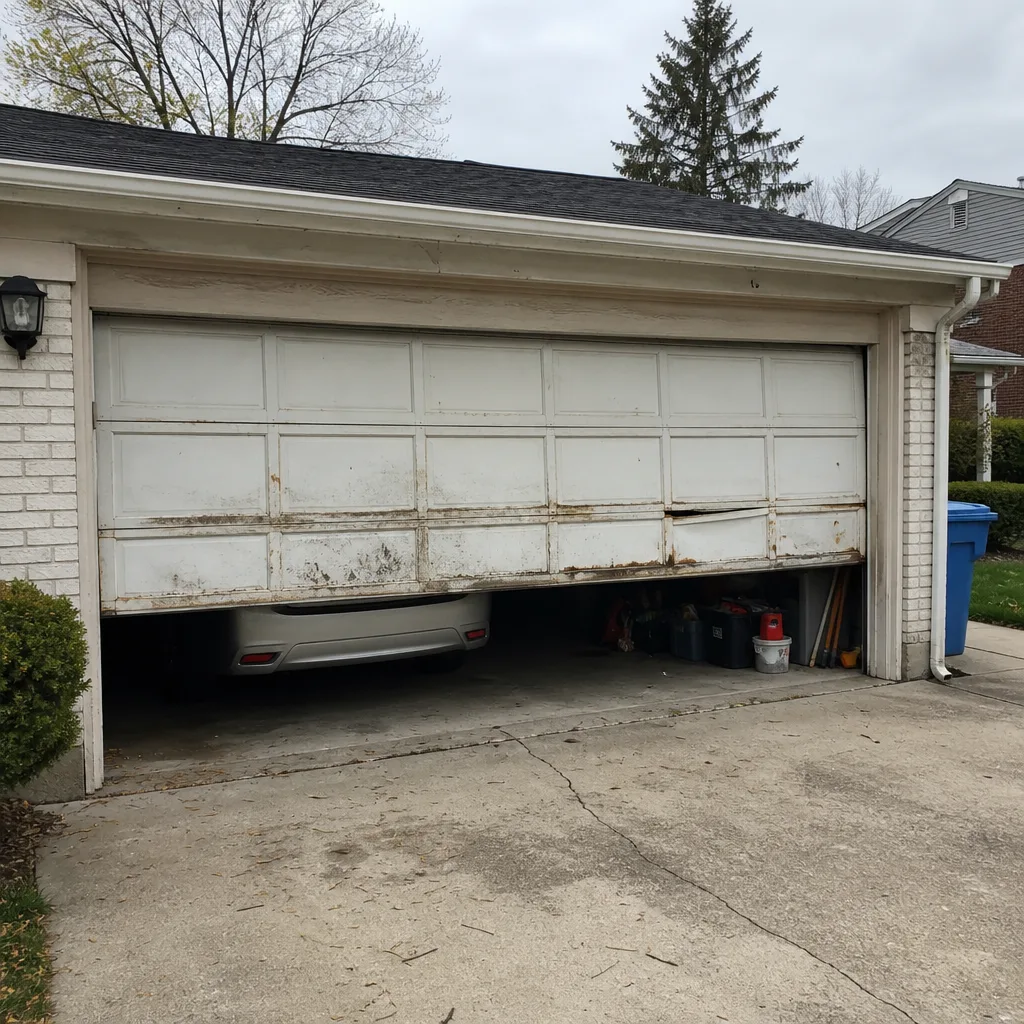 Before
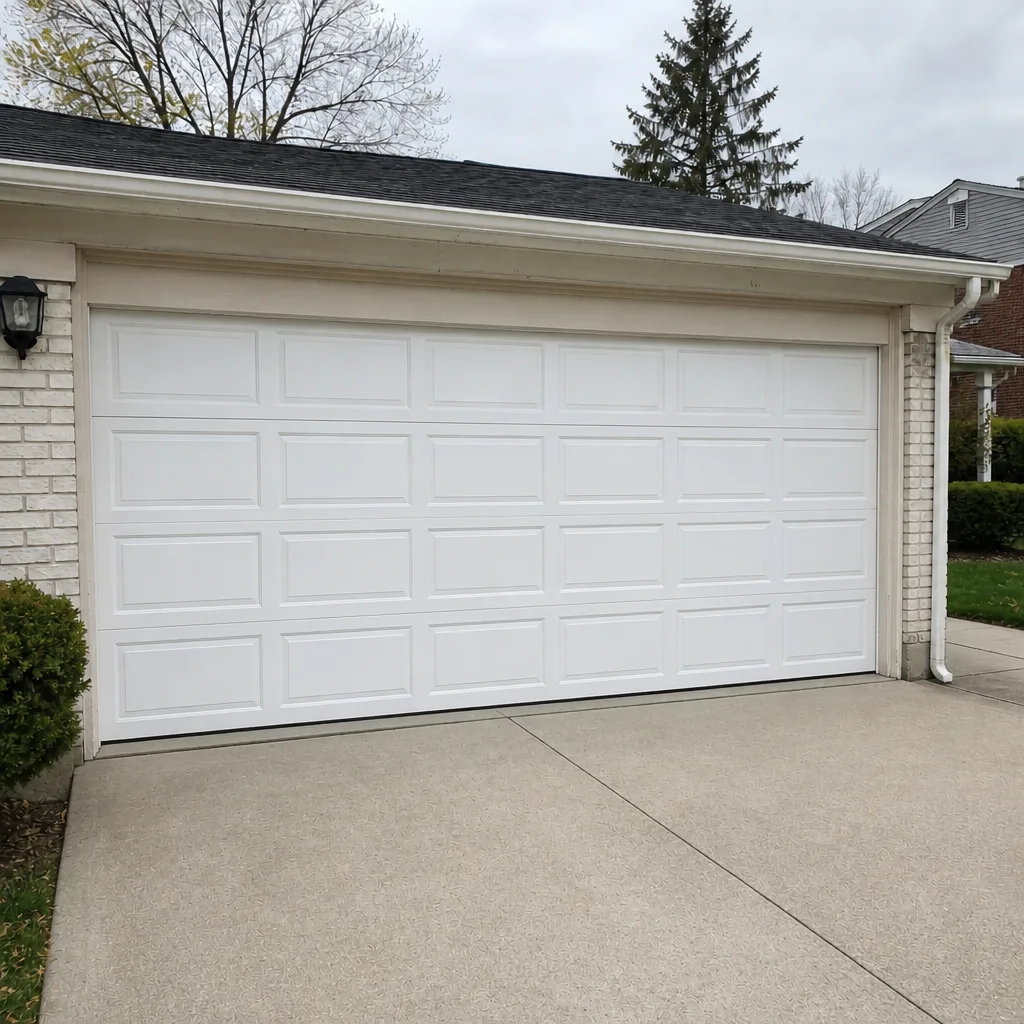 After
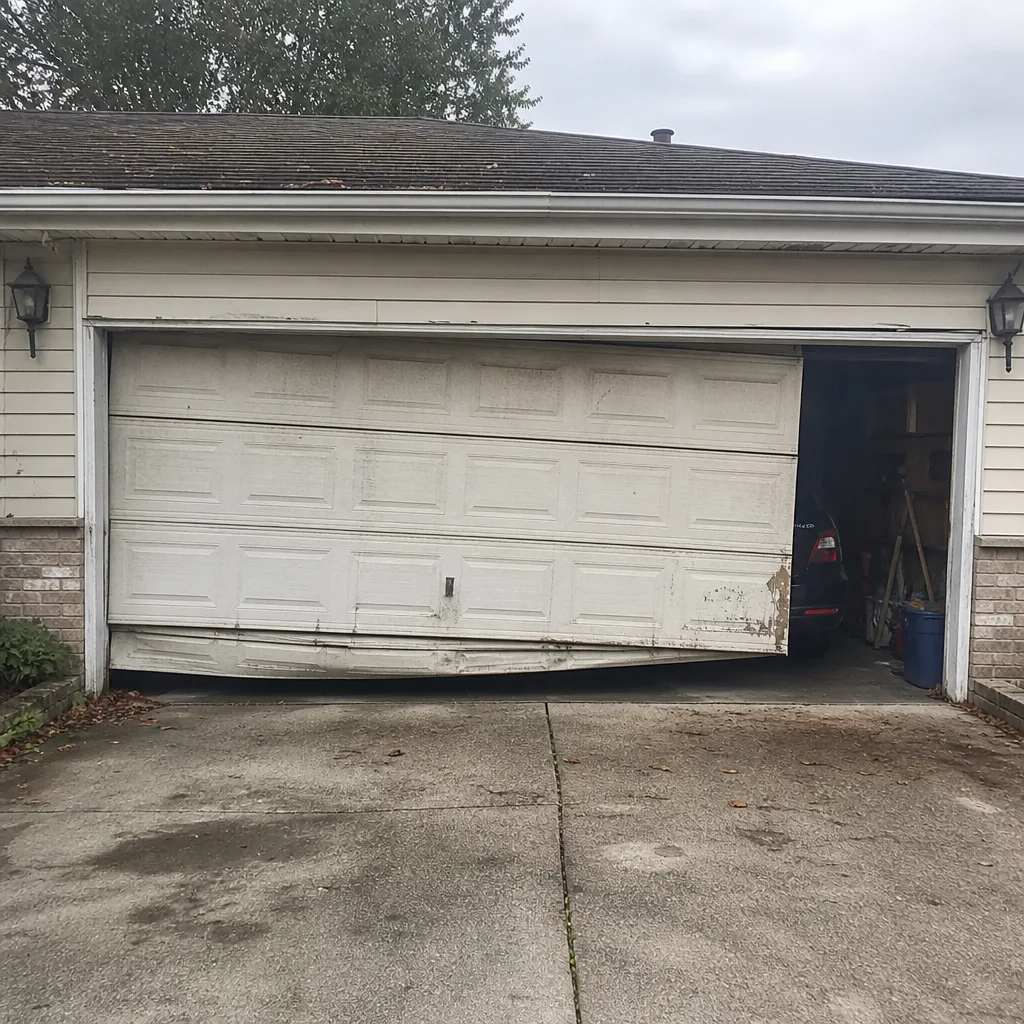 Before
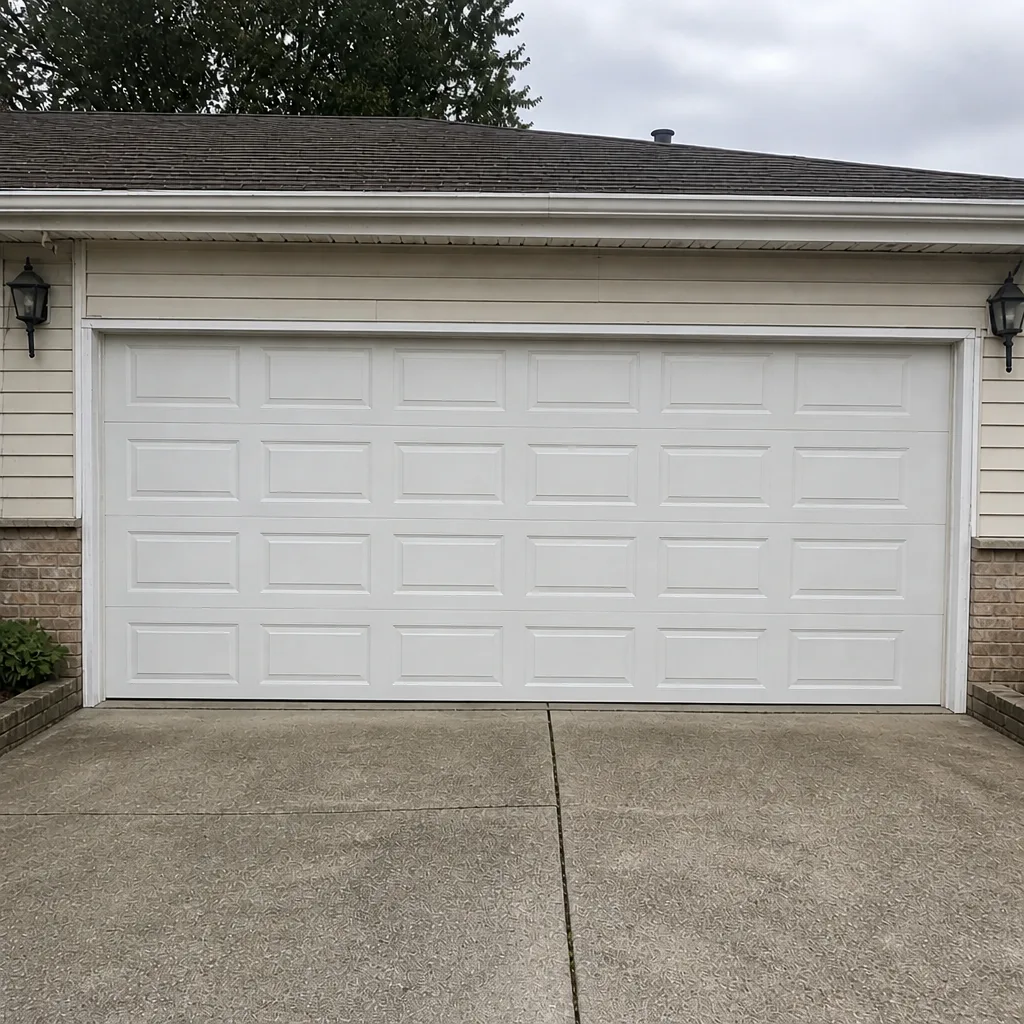 After
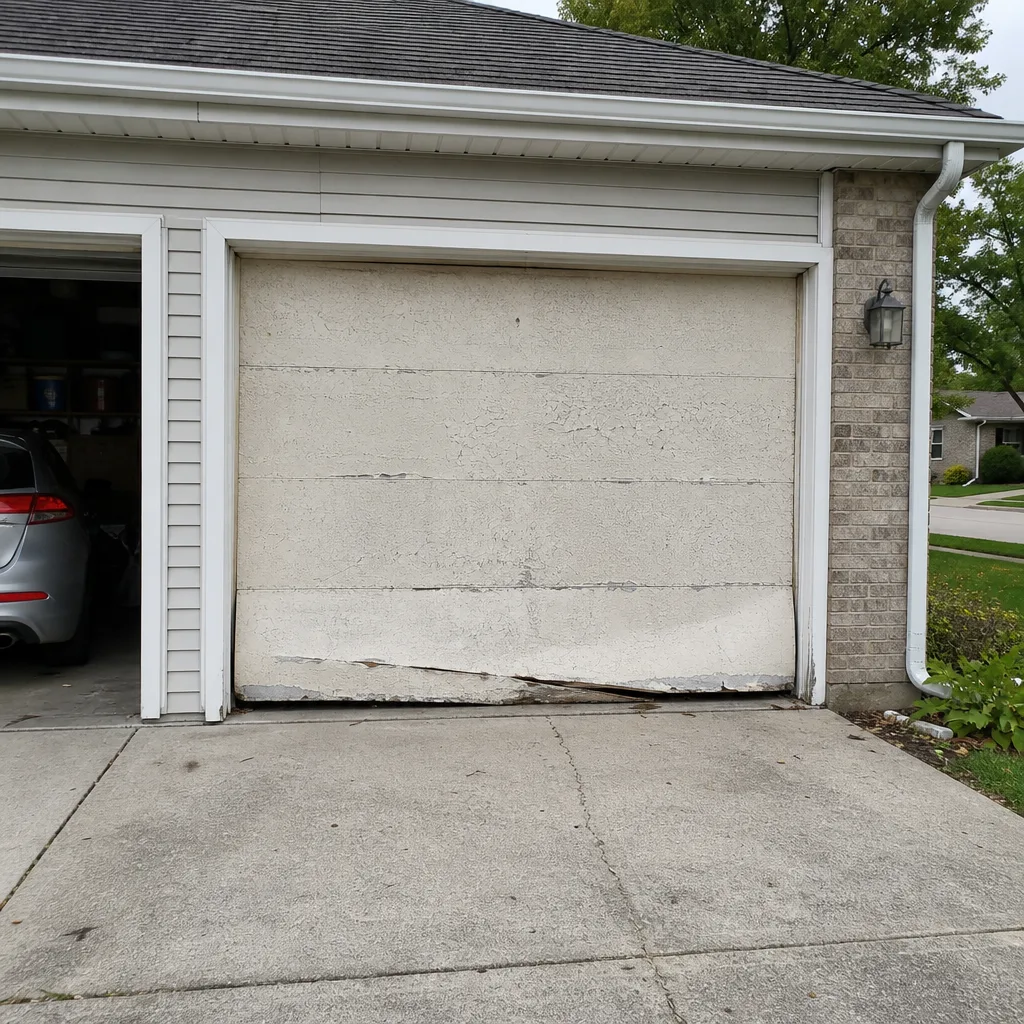 Before
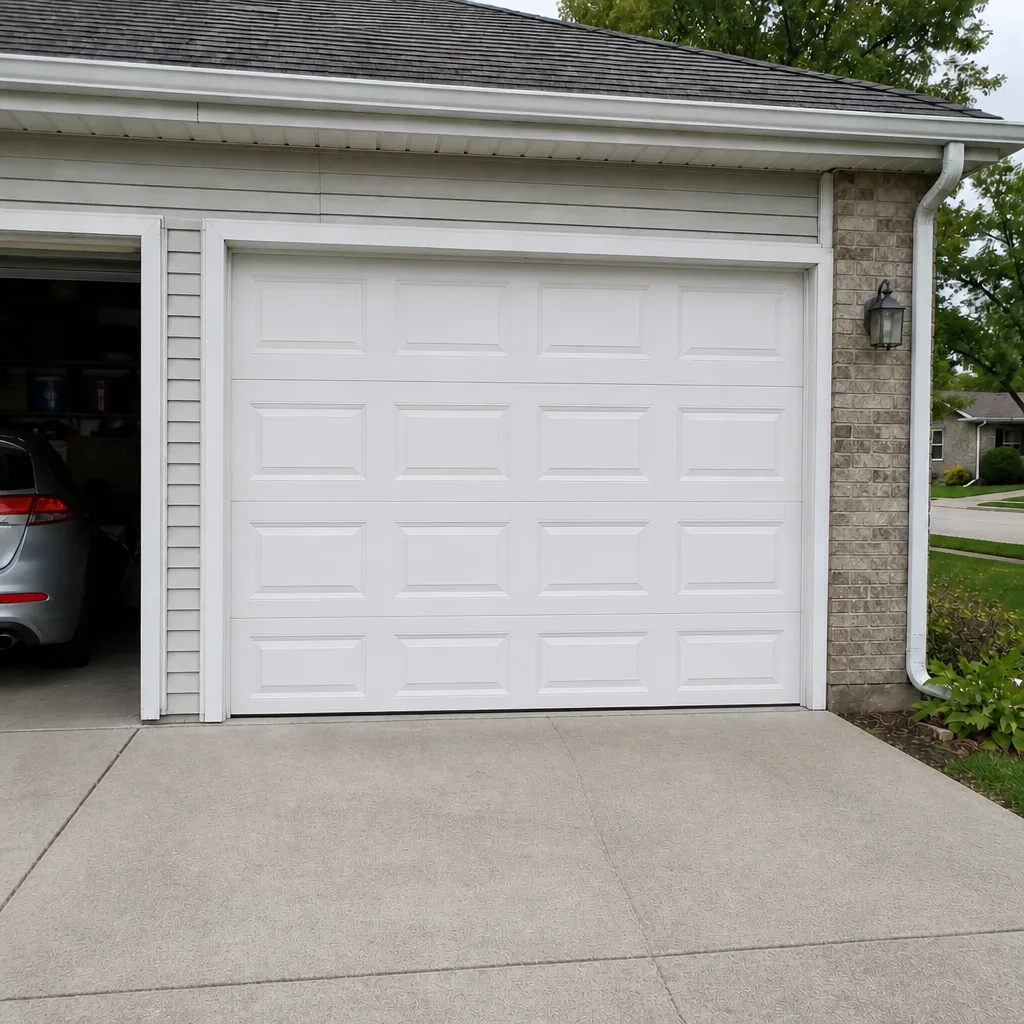 After
When to Call a Professional
Some garage door issues are worth watching for a few days. Others need a call now. Call a technician when a torsion spring breaks (a loud bang, then a door that won’t lift), when the door comes off its track, when the opener runs but the door doesn’t move, when the safety sensors won’t stay aligned, or when the door is unbalanced, meaning it falls slowly on its own or won’t stay halfway up. Also call if you’re not sure what’s wrong and the door is binding, jamming, or making a sound it didn’t make last month. For spring and opener work, we can often get the same door working the same day. Arlington Heights Garage Door Repair Pros offers free estimates in Arlington Heights: call (877) 460-4338, and the price is quoted and agreed before any work starts.
Frequently Asked Questions
It depends on the part that failed. A bottom-seal replacement is a small job; a spring replacement, an opener replacement, or a track realignment falls in a higher range. We can’t give you a real number until we’ve seen the door and sized the job, so we measure first and put the price in writing before we start. Nothing is ordered or installed until you’ve agreed to the written estimate. Call (877) 460-4338 for a free estimate.
Often, yes. A stuck door is usually a spring, track, or opener failure, and those can frequently be repaired the same day. Call and tell us what you’re seeing: whether the opener runs, whether the door will lift at all, and where it’s stuck. That helps us come prepared. For urgent situations, use our emergency line at (877) 460-4338.
No, not after the written estimate is agreed. The price is quoted and agreed before any work starts. If we discover something during the job that wasn’t visible beforehand, we stop and talk to you about it before doing anything that would change the cost. Nobody should get an invoice bigger than the quote.
The local professionals we connect you with are licensed and insured as their state requires. We’re a garage door specialist, and the work is done by technicians who work on garage doors specifically. Our technicians have up to 9 years of experience.
Most doors last 15 to 20 years with good maintenance. The freeze-thaw cycle here shortens the life of bottom seals and weatherstripping faster than the panel itself, so seals often need replacing two or three times over a door’s life. Springs typically fail sooner than the panel, usually in the 7-to-10-year range, because they carry the full weight of the door. If the panel is sound and parts are available, repair usually makes more sense than replacement.
In many subdivisions, yes. The declaration and architectural rules usually specify approved colors and materials, and many associations require an approval submission before work begins. Ask your property manager or board for the rules, get approval in writing, and only then order the door. It’s the step most homeowners skip, and it’s the one that causes the most trouble afterward.
The Bottom Line
A garage door in Arlington Heights is a system, and the right decision depends on your specific home: your headroom, your HOA rules, your insulation needs in a Cook County winter, and how much life is left in the springs, opener, tracks, and seals. Evaluate all five parts together, measure before you order, get your HOA approval in writing, and match the insulation to your actual house. Repair makes sense while parts are available and the panel is sound. Replacement makes sense when multiple components near the end of life at once. Either way, call (877) 460-4338 for a free estimate. We’re a specialist, and we’ll tell you what the job involves before anything starts.
Written by the team at Arlington Heights Garage Door Repair Pros.